When the Body Reaches a Crossroads: Early Palliative Care, Serious Illness, and the Right to a Dignified Life
Published on
Updated on
Categories: Advance Directives, Advocacy, Ethics, Health Navigation Specialist, Hospice, Palliative Care

Guiding Life's Journey with Care
Guiding Life's Journey with Care
Published on
Updated on
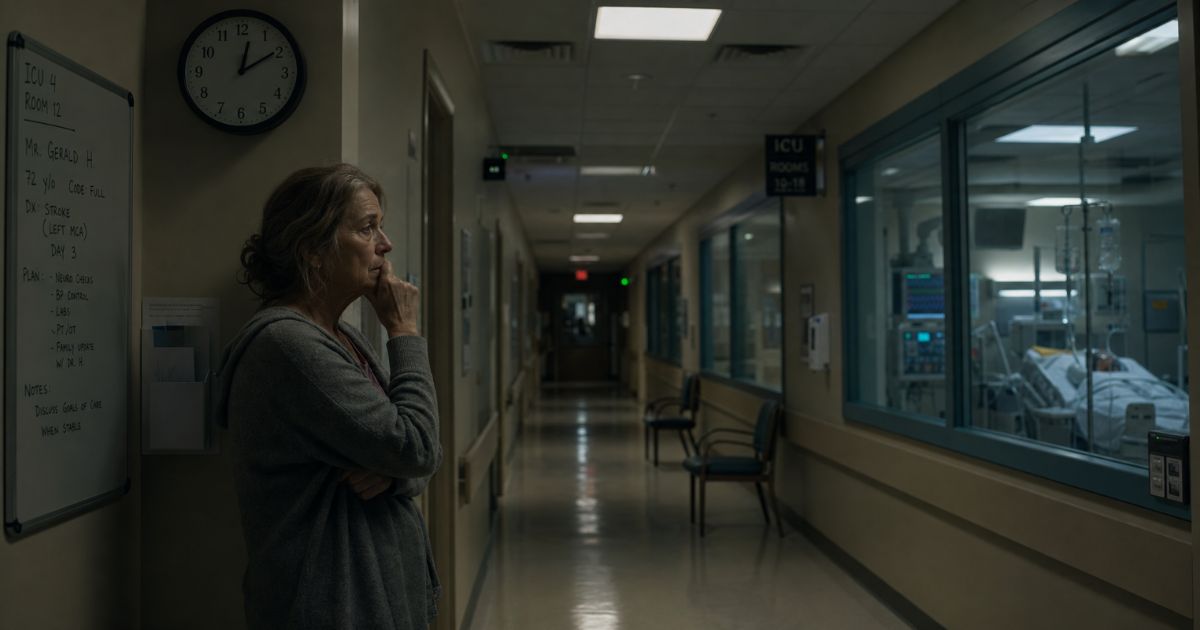
Table of Contents
The call came just after midnight. Margaret had been visiting her husband, Gerald, in the ICU for three days. He had survived a massive stroke, but the doctor’s words hung in the air like smoke: “We got him back. But we need to talk about what comes next.” No one in that hallway knew to ask for a palliative care consultation. Gerald’s family spent the next two weeks making decisions in crisis mode, without the guidance of a team trained specifically to help them.
That experience is more common than it should be. And it is preventable.
People often confuse palliative care and hospice care, using the terms as if they mean the same thing. They do not.
Palliative care is specialized medical support focused on relieving pain, managing symptoms, and supporting the emotional and spiritual needs of people living with serious illness. It can start the same day a person receives a serious diagnosis or survives a life-threatening event. It runs alongside curative and life-extending treatment, not instead of it. A person receiving chemotherapy, dialysis, or cardiac medication can also receive palliative care at the same time.
Maria, 58, was diagnosed with advanced heart failure following a hospitalization. Her cardiologist requested a palliative care consultation the same week. The palliative team helped control her breathlessness, supported her family’s emotional needs, and made sure her care plan reflected what she actually valued. She continued her cardiac treatment. Palliative care did not replace it.
Hospice care is different. It begins when a physician certifies that a patient has six months or less to live if the illness follows its usual course, and when the patient chooses to focus on comfort rather than cure. All hospice care is palliative in nature, but not all palliative care is hospice. Hospice is a specific status. Palliative care is a layer of support that can begin far earlier and last much longer.
When a family does not ask for palliative care after a serious medical event, the consequences are real and painful. Robert’s family waited six months after his COPD hospitalization before anyone brought up palliative care. By then, his breathlessness was poorly controlled, he had been readmitted to the hospital twice, and no one had ever asked him whether he wanted to be on a ventilator if it came to that. His family made that decision in an emergency room at 2 a.m., without any preparation, without knowing his wishes, and without support. A palliative consultation six months earlier would not have changed his diagnosis. It would have changed everything else.
When a stroke is severe enough to leave a person on a ventilator or significantly impaired, the medical team is focused on stabilization. That is critical work. What sometimes gets missed is the conversation about what the patient would want if recovery does not go as hoped.
Gerald’s family, from the opening of this article, eventually did receive a palliative care consultation, but only after an attending nurse advocated strongly for it. Once the palliative team arrived, they facilitated a family meeting. They explained what the imaging showed, what the likely recovery trajectory looked like, and they asked the family a question no one else had asked: “What did Gerald say he would want in a situation like this?” That question changed the direction of his care. The family recalled that Gerald had once said he never wanted to live “hooked to machines.” The palliative team helped translate that value into a medical care plan that honored it with dignity.
You do not have to wait for a crisis to deepen before asking for this consultation. Ask for it the moment the stroke team says the words “serious” or “significant damage.”
Advanced heart failure is unpredictable. Patients can seem stable one week and be in the ICU the next. Barbara’s cardiologist had been managing her Class IV heart failure for two years. She had been hospitalized four times in eighteen months. Each time, the focus was on stabilizing her fluid levels and adjusting her medications. No one had discussed what she wanted if stabilization stopped working.
Her daughter finally asked for a palliative care consultation during the fourth hospitalization. The team came within twenty-four hours. They helped Barbara articulate that she did not want another hospitalization if it was not going to improve her quality of life. They worked with her cardiologist to build a home-based comfort plan. Barbara spent her final weeks at home, her symptoms controlled, surrounded by her family. That outcome did not happen by accident. It happened because someone asked for help at the right time.
Lung failure, whether from COPD, pulmonary fibrosis, or another progressive condition, brings a particular kind of suffering: the relentless, terrifying sensation of not being able to breathe. Standard pulmonary care manages the disease. Palliative care manages the person.
James had been on home oxygen for two years. After his second hospitalization for a COPD exacerbation, his pulmonologist asked for a palliative consult. The palliative team introduced low-dose oral morphine to reduce the sensation of breathlessness, a practice well-supported in palliative medicine. They also connected James and his wife with a social worker who helped them understand what his advance directive did and did not cover. James did not leave the hospice that day. He left the hospital with a plan, with controlled symptoms, and with a team that knew his wishes.
End-stage kidney disease carries a heavy burden, including the physical demands of dialysis, fatigue, dietary restrictions, and the emotional weight of knowing the disease is progressive.
Dorothy was 79, on dialysis three times a week, and increasingly exhausted. Her nephrologist noticed she had stopped attending her sessions reliably. Instead of increasing pressure, the nephrologist brought in the palliative care team. In a quiet conversation, Dorothy told them she had been thinking about stopping dialysis for months but did not know if it was “allowed.” The palliative team explained her options fully, including what discontinuing dialysis would look like and how comfort care would be provided. Dorothy made an informed decision to stop dialysis. She died at home ten days later, with her family, in no pain, on her own terms.
Many people have a living will. Far fewer have one that actually does what they need it to do.
A standard living will form might ask whether you want “life-sustaining treatment” in a terminal condition. That language is vague. It does not tell your medical team whether you would accept a time-limited trial on a ventilator before reassessing. It does not say whether you want palliative care initiated alongside any curative treatment. It does not address what “quality of life” means to you.
A well-constructed medical living will goes beyond checkboxes. It addresses your preferences for pain management, your willingness to accept specific life-sustaining interventions, any time-limited trials you would accept or refuse, and your wishes for palliative care involvement at any point during a serious illness. It names your healthcare agent and explains the values that should guide that person’s decisions when the situation is unclear.
When Eleanor’s husband had a sudden cardiac event, the hospital team found her husband’s living will in his wallet. It checked the “no extraordinary measures” box. Nothing else. The family spent three agonizing days in conflict about what that meant. A more detailed document, accompanied by guidance, would have given them clarity rather than conflict.
Completing a comprehensive medical living will on your own is possible, but getting it right is hard. Advance care planning specialists, often nurses, social workers, or specially trained professionals, help you think through scenarios you may not have considered. They translate your values into medical language. They know which questions to ask and which answers to probe. Your living will is only as useful as it is specific, and the person who helps you write it matters enormously.
Healthcare navigators and health and life navigation specialists with medical backgrounds are professionals who bridge gaps among patients, families, and the healthcare system. They are not the same as hospital case managers. They advocate specifically for you, helping coordinate palliative care consultations, advance care planning, communication with the medical team, and transitions between levels of care.
Sandra’s mother was discharged from the hospital after a serious kidney failure episode with a list of follow-up appointments, three new medications, and no clear plan for what came next. Sandra had taken time off work, was exhausted, and did not know what questions to ask. A health and life navigation specialist with a nursing background stepped in. Within a week, she had arranged a palliative care consultation, helped Sandra’s mother complete a comprehensive advance directive with an advance care planning specialist, and ensured that every member of the medical team was communicating with one another. Sandra later said, “I didn’t know that kind of help existed.”
It does exist. And you deserve to use it.
Asking for palliative care is not giving up. It is one of the most active, informed choices a family can make after a serious medical event. Stroke. Heart failure. Lung failure. Kidney failure. Any of these can be the moment that changes everything, and not just medically. Families need support. Patients need their voices heard.
If your loved one has just survived something serious, speak up. Ask the medical team directly: “Can we have a palliative care consultation?” If you feel lost in the system, seek out a healthcare navigator or health and life navigation specialist who can help you find your footing.
Resources are available. Compassion Crossing, LLC offers guidance, articles, and connections to professionals who specialize in palliative care, advance care planning, and end-of-life support. You do not have to figure this out alone, and you should not have to.
Gerald’s family eventually found their way. They made decisions that honored who he was. They had help. So can you.
A Neuropalliative Care Reflection on Severe Stroke, Extubation, and Dignity at the End of Life
Neuropalliative Care in Severe Acute Brain Injury and Stroke
Restoring Dignity and Hope in Neurological Illness: A Reflection on Neuropalliative Care
Goals-of-Care & Palliative Approaches
Articles on Advance Directives
Eldercare Locator: a nationwide service that connects older Americans and their caregivers with trustworthy local support resources
Find the Long-Term Care Ombudsman Program in Your State
Greater National Advocates Directory of Independent Patient Advocates
Patients Voices Matter Foundation – Empowering Patients, Transforming Lives
Independent Patient Advocate – Independent, non-clinical patient advocacy nationwide. Health Navigation, SSDI Application & Appeals, and Whole Health Advocacy. 100% remote. No insurance accepted.
Compassion Crossing, LLC – Independent, clinical patient advocacy nationwide.
Natural Death With Dignity: Protecting Your Right To Refuse Medical Treatment
Beyond the Living Will: Creating Effective Advance Directives and Value-Based Advance Care Planning: A Guide for Helping Professionals
Death and Dying: A Good Exit Plan
Free Daily Symptom Tracker: Each headache, flare, or fatigue spike reveals a clue. This two-page Daily Symptom Tracker records sleep quality, food intake, triggers, severity, and effective relief methods—all in one place. Use it daily for 31 days and share the pages with your healthcare provider or health navigation expert. Together, you can move from guessing to addressing the root cause. Instructions on how to use the free daily symptom tracker and the free daily symptom tracker.
Free Caregiver and Dementia Training Videos
CaringInfo – Caregiver support and much more!
The Hospice Care Plan (guide) and The Hospice Care Plan (video series)
Understanding Palliative Care: A Guide to Common Questions and Answers
Bridging the Gap: Palliative Care’s Role in Supporting Rare Disease Patients
Comprehensive Guide to Financial Assistance for Hospice and Palliative Care Patients
Surviving Caregiving with Dignity, Love, and Kindness
Caregivers.com | Simplifying the Search for In-Home Care
Geri-Gadgets – Washable, sensory tools that calm, focus, and connect—at any age, in any setting
Healing Through Grief and Loss: A Christian Journey of Integration and Recovery
This site uses Amazon Associate links, which means I earn a small commission when you purchase books or products through these links—at no extra cost to you. These earnings help me keep this website running and ad-free, so I can continue providing helpful articles and resources at no charge.
If you don’t see anything you need today but still want to support this work, you can buy me a cup of coffee or tea. Every bit of support helps me continue writing and sharing resources for families during difficult times.
VSED Support: What Friends and Family Need to Know
Take Back Your Life: A Caregiver’s Guide to Finding Freedom in the Midst of Overwhelm
The Conscious Caregiver: A Mindful Approach to Caring for Your Loved One Without Losing Yourself
Everything Happens for a Reason: And Other Lies I’ve Loved
Final Gifts: Understanding the Special Awareness, Needs, and Communications of the Dying
Holistic Nurse: Skills for Excellence book series
One-to-One Hospice Nurse Coaching
Self-Paced Hospice Nurse Courses
Digital Downloads for Hospice Teams
The following are hospice-related digital products intended to aid benefit clinicians and agencies:
Empowering Excellence in Hospice: A Nurse’s Toolkit for Best Practices book series
The best symptom management book the author has read: Notes on Symptom Control in Hospice & Palliative Care


