A Guide to Death Doulas: What They Do, Who They Are, and Why You Shouldn’t Wait
Published on
Updated on

Guiding Life's Journey with Care
Guiding Life's Journey with Care
Published on
Updated on
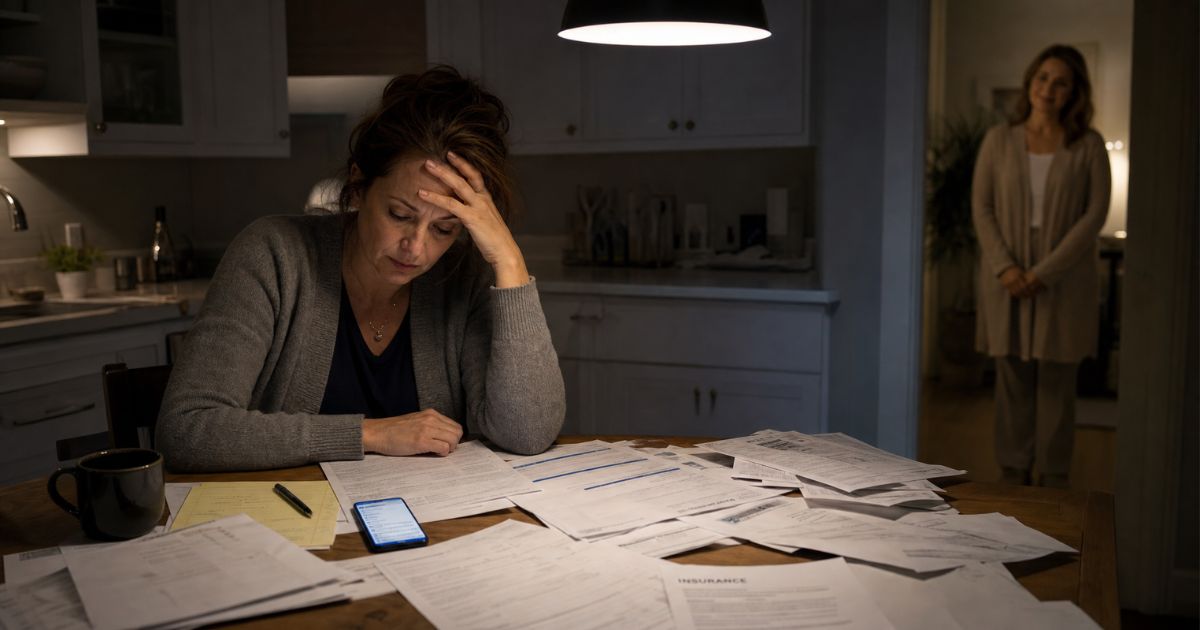
Table of Contents
Margaret got the call on a Tuesday afternoon. Her mother had been living with a lung condition for two years, but now the pulmonologist had said the words no one is ever really prepared to hear: “We’ve done everything we can.” Margaret sat at her kitchen table that night, surrounded by papers she didn’t understand, phone numbers she didn’t know how to use, and a deep, heavy silence. She didn’t know who to call first. She didn’t know what questions to ask. She didn’t know what was coming, or how to prepare herself, or how to help her mother through it.
She had no idea a death doula existed.
A death doula is a person who takes on a supportive role alongside individuals and families navigating serious illness, dying, and the grief that surrounds it. The role is not a licensed profession. It carries no regulatory board, no government-issued credential, and no single standard of training. What it does carry, when performed with skill and commitment, is something that most medical systems cannot adequately provide: sustained, unhurried, whole-person presence from early illness through death and into bereavement.
Most people are more familiar with birthing doulas, those who support pregnant people and their partners through the physical and emotional experience of labor and delivery. Birthing doulas stay close, advocate for the laboring person’s wishes, and remain present when the medical team steps away. The work is deeply human. It honors one of life’s most intense passages.
Death doulas do something parallel. They walk alongside a person during the labor of leaving life, offering that same kind of sustained, attentive presence. A birthing doula supports the work of bringing life in; a death doula supports the work of letting life go. Both demand skill, patience, and a willingness to stay fully present when everything feels uncertain.
Here is what most people get wrong: they imagine a death doula arriving at the bedside in the final days. That is one part of the role. A much smaller part.
Think about what the year after a serious diagnosis can look like. There are doctors’ appointments overflowing with information that no one has time to explain fully. There are family members who disagree about what to do. There are forms to complete, decisions to make, and fears that surface at 2 a.m. when the house is quiet. A death doula enters the picture early, ideally at or shortly after diagnosis, and stays through the entire arc of the illness.
That means facilitating goals-of-care conversations: honest discussions about what matters most to a person, what they are and are not willing to go through medically, and what they want their final days to look like. It means helping complete a values-based advance care plan, one that goes beyond legal paperwork and captures who the person actually is and what they believe. It means guiding families on when to ask their doctors about palliative care or hospice, services that many families wait far too long to access. Death doulas also offer grief support from the very beginning of the journey, long before anyone has died, and they remain present in the days and weeks after the death occurs.
Anticipatory grief is the grief a person feels before a death occurs. It is real grief, and it can be just as heavy as anything that comes after.
Picture a woman named Rosa. Every Sunday, she and her father have lunch together. He has been diagnosed with a terminal illness, and lately she finds herself crying on Sunday afternoons, not because anything bad happened that day, but because she can already feel the Sundays that are coming. The ones without him. She is mourning something she has not yet lost, does not have a word for it, and is not sure whether what she is feeling is allowed.
A death doula knows this grief by name. They are trained to sit with it, to help both the person who is dying and the people around them process what is already in motion, before the crisis makes everything harder. They also continue to provide support after the death, helping families through early bereavement and the difficult days that follow.
People who serve as death doulas come from widely diverse backgrounds. Some are registered nurses. Some are licensed clinical social workers, certified nursing assistants, or chaplains. Others come from no clinical background at all and have completed a death doula training course.
This matters because the role and the person’s other professional work are separate things, though they coexist. Consider Nurse Peter at Compassion Crossing, LLC. He is a registered nurse and serves as a death doula. His RN credential does not go away when he sits with a family in crisis at 10 o’clock at night. His nursing knowledge, clinical judgment, and ability to read medical events are all present and active in every interaction. The death doula role is what he is doing. The RN is what he is.
The same logic applies to a death doula who is also a licensed social worker or a CNA. Each person brings their full professional self into this work. The death doula role does not replace or suspend any of that. What it does is provide a framework of sustained, relationship-centered care that sits alongside the existing medical team rather than substituting for it. A death doula working with a family that already has a hospice nurse does not become that nurse’s replacement. They add presence, time, and continuity that a structured medical visit cannot offer.
This work is also a paid professional service. Death doulas are compensated for their time. The skill involved is real, the hours are real, and the expertise brought to each family is real.
Here is the honest truth: anyone can call themselves a death doula. No licensing board governs the role. No state issues a death doula license. No regulatory body can revoke the title.
Training programs exist, and some are genuinely rigorous. A person who completes the course receives a certificate of course completion. That certificate is not a professional credential in the way an RN license or a social work license is a credential. It shows that someone completed a program. It does not guarantee competence, experience, or character.
That places the responsibility for choosing wisely squarely on you. Here is how to approach that search:
That last question tells you a great deal. A good death doula is not trying to be the only option in the room. They are trying to help you find the right support.
Consider two families facing the same unexpected situation: a loved one is hospitalized suddenly after a stroke, and that person can no longer speak for themselves. The doctors are asking what the family wants to do.
The first family worked with a death doula over the past year. They completed an advance care plan together. They know what their mother valued, what she feared, what she was and what she was not willing to endure medically. Those conversations happened in a calm setting, without a crisis bearing down on them. They do not all agree on everything, but they know what she wanted, and that knowledge holds them together.
The second family has never had those conversations. No documentation exists. There is disagreement, guilt, and conflict. No one is certain what their mother would have chosen, and decisions are being made under pressure, in grief, without clarity.
The difference between those two families is not money, education, or how much they loved her. The difference is time. The first family used the time they did not know they had.
We cannot predict when a medical crisis will occur. We cannot predict when any of us might lose the ability to speak for ourselves. Advance care planning carries the most weight when it is done early, when there is no emergency pressing down on the conversation, when everyone has space to think clearly and speak honestly.
You do not need a diagnosis to connect with a death doula. You do not need to be in crisis, elderly, or facing a terminal illness. You need only be someone who cares about how this experience goes, for yourself and for the people who love you.
Find your local death doula. Have an introductory conversation. Ask your questions. See whether the connection feels right. You are not signing anything or committing to anything. You are simply learning who is out there before you urgently need them.
Starting advance care planning discussions early is one of the most caring things you can do for your family. Your wishes, your values, and your voice deserve to be known while you are able to express them. The people who love you deserve that clarity. And so do you.
Death Doula Articles on Compassion Crossing
Compassion Crossing Academy — Free and paid online courses are available to teach caregivers, nurses, social workers, chaplains, end-of-life advocates, and educators, including death doulas, how to confidently coordinate complex care.
The Death Deck is often a wonderful conversation starter.
Currently, no official organization regulates end-of-life doulas (EOLDs). Remember that some EOLDs listed in directories may no longer be practicing, so it’s important to verify their current status.
Before you consider a death doula school, please volunteer with a local hospice provider as a “companion volunteer” to gain experience with strangers who are dying, as well as with family and staff dynamics. The author also recommends reading the article Economic rant: The death doula crisis we aren’t talking enough about, as most death doula schools do not emphasize that being a death doula is a calling rather than a career.
The following are end-of-life (aka death doula) schools for those interested in becoming an end-of-life doula:
Remember that there is no official accrediting body for end-of-life doula programs. Certification simply shows you’ve completed an unaccredited course and received a certificate of completion. It’s advisable to have discovery sessions with any death doula school you’re considering — even if it isn’t listed here — to see if it meets your needs. Also, ask questions and reach out to references, such as former students, to assess whether the school provided a solid foundation for launching your own death doula practice.
Please note that some members listed in a specific collective or alliance might no longer be active.
Articles on Advance Directives
Eldercare Locator: a nationwide service that connects older Americans and their caregivers with trustworthy local support resources
Find the Long-Term Care Ombudsman Program in Your State
Greater National Advocates Directory of Independent Patient Advocates
Patients Voices Matter Foundation – Empowering Patients, Transforming Lives
Independent Patient Advocate – Independent, non-clinical patient advocacy nationwide. Health Navigation, SSDI Application & Appeals, and Whole Health Advocacy. 100% remote. No insurance accepted.
Compassion Crossing, LLC – Independent, clinical patient advocacy nationwide.
Natural Death With Dignity: Protecting Your Right To Refuse Medical Treatment
Beyond the Living Will: Creating Effective Advance Directives and Value-Based Advance Care Planning: A Guide for Helping Professionals
Death and Dying: A Good Exit Plan
Free Daily Symptom Tracker: Each headache, flare, or fatigue spike reveals a clue. This two-page Daily Symptom Tracker records sleep quality, food intake, triggers, severity, and effective relief methods—all in one place. Use it daily for 31 days and share the pages with your healthcare provider or health navigation expert. Together, you can move from guessing to addressing the root cause. Instructions on how to use the free daily symptom tracker and the free daily symptom tracker.
Free Caregiver and Dementia Training Videos
CaringInfo – Caregiver support and much more!
The Hospice Care Plan (guide) and The Hospice Care Plan (video series)
Understanding Palliative Care: A Guide to Common Questions and Answers
Bridging the Gap: Palliative Care’s Role in Supporting Rare Disease Patients
Comprehensive Guide to Financial Assistance for Hospice and Palliative Care Patients
Surviving Caregiving with Dignity, Love, and Kindness
Caregivers.com | Simplifying the Search for In-Home Care
Geri-Gadgets – Washable, sensory tools that calm, focus, and connect—at any age, in any setting
Healing Through Grief and Loss: A Christian Journey of Integration and Recovery
This site uses Amazon Associate links, which means I earn a small commission when you purchase books or products through these links—at no extra cost to you. These earnings help me keep this website running and ad-free, so I can continue providing helpful articles and resources at no charge.
If you don’t see anything you need today but still want to support this work, you can buy me a cup of coffee or tea. Every bit of support helps me continue writing and sharing resources for families during difficult times.
VSED Support: What Friends and Family Need to Know
Take Back Your Life: A Caregiver’s Guide to Finding Freedom in the Midst of Overwhelm
The Conscious Caregiver: A Mindful Approach to Caring for Your Loved One Without Losing Yourself
Everything Happens for a Reason: And Other Lies I’ve Loved
Final Gifts: Understanding the Special Awareness, Needs, and Communications of the Dying