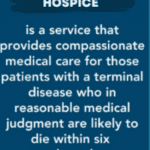
Hospice care is a compassionate approach designed to support individuals facing life-limiting illnesses. It focuses on providing comfort, dignity, and quality of life during the final stages of life. Unlike traditional medical care, hospice care does not aim to cure the illness but rather to manage symptoms and provide emotional, spiritual, and social support to patients and their families.
Key Features of Hospice Care:
Patient-Centered Care: Tailored to meet each patient’s unique needs and wishes.
Team-Oriented Approach: This approach involves a multidisciplinary team, including doctors, nurses, social workers, spiritual advisors, and trained volunteers.
Comprehensive Support: This provider offers medical care, pain management, emotional and spiritual support, and bereavement counseling for families.
Flexible Locations: Provided in various settings such as the patient’s home, hospitals, nursing homes, and dedicated hospice facilities.
Importance of Hospice Care:
Quality of Life: Ensures patients live their remaining days with dignity and as comfortably as possible.
Family Support: Provides essential support to family members, helping them cope with the emotional and practical challenges of caregiving.
Holistic Approach: This approach addresses not only physical symptoms but also emotional and spiritual needs, fostering a sense of peace and acceptance.
Introduction to the Issue of Hospice Fraud
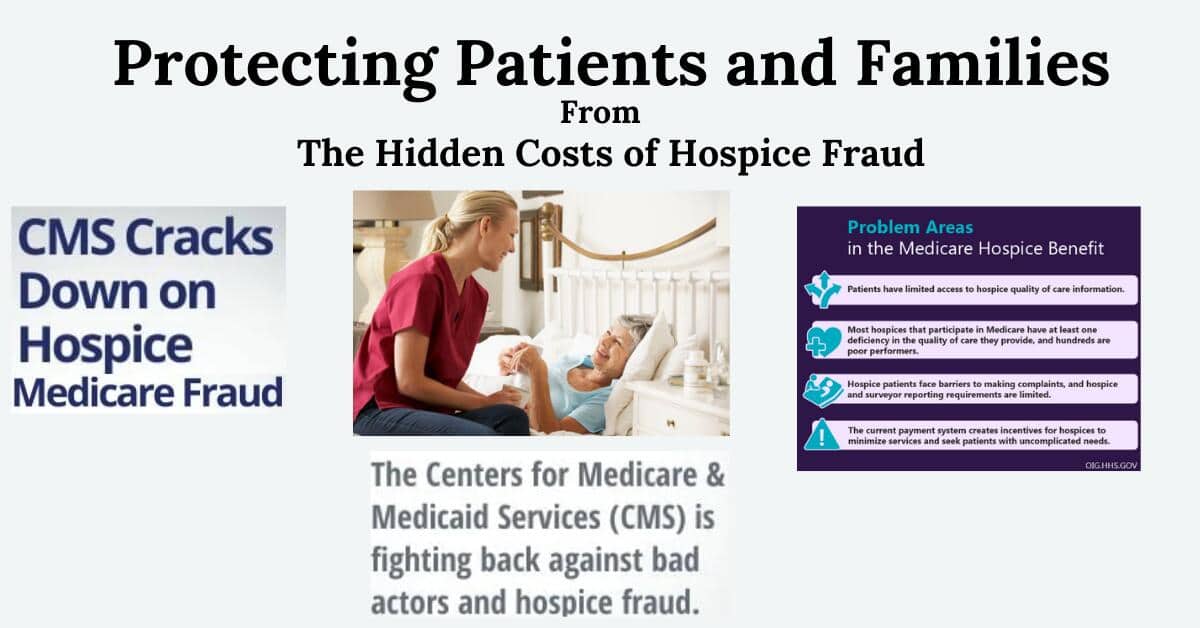
While hospice care is vital, it is not immune to fraudulent activities. Hospice fraud involves unethical practices such as billing for services not rendered, enrolling ineligible patients, and overcharging for services. These actions can have devastating impacts on patients and their families, leading to inadequate care, financial burdens, and emotional distress.
Common Types of Hospice Fraud:
Billing for Non-Existent Services: Charging for care that was never provided.
Enrolling Ineligible Patients: Admitting patients not meeting the hospice eligibility criteria.
Overcharging for Services: Inflating costs or billing for unnecessary treatments.
Purpose of the Article
This article aims to:
Educate: Provide a thorough understanding of hospice care and the significance of choosing a trustworthy provider.
Inform: Highlight the impacts of hospice fraud on patients, caregivers, and families.
Empower: Offer practical tips for selecting a reliable hospice provider to ensure patients receive the compassionate and ethical care they deserve.
Hospice care is an essential service that provides comfort and dignity to individuals nearing the end of life. However, hospice fraud can undermine the quality of care and trust in the system. This article will guide you in understanding hospice care, recognizing the impacts of fraud, and making informed decisions when choosing a reliable hospice provider.
Understanding Hospice Fraud
Definition and Types of Hospice Fraud
Hospice fraud occurs when healthcare providers use unethical practices to exploit the hospice care system, often for financial gain. This can lead to significant harm to patients and their families, both emotionally and financially. Here, we will explore the main types of hospice fraud and their implications.
Billing for Services Not Provided
Hospice providers may bill for services that were never rendered to the patient. This fraudulent activity can take several forms:
Phantom Visits: Charging for nurse or caregiver visits that never occurred.
Inflated Services: Billing for a higher level of care than provided.
Double Billing: Charging both Medicare and private insurance for the same service.
Implications:
Patients may not receive the necessary care and support.
Families may face unexpected financial burdens.
Trust in healthcare providers is eroded.
Enrolling Ineligible Patients
Some hospice providers may enroll patients who do not meet the eligibility criteria for hospice care, which typically requires a prognosis of six months or less to live if the illness runs its normal course. This can happen through:
False Certification: Doctors or healthcare providers falsely certify patients as terminally ill.
Pressure Tactics: Using high-pressure sales tactics to convince patients or families to enroll in hospice care.
Implications:
Patients may be deprived of curative treatments that could improve their quality of life.
Families may be misled about the patient’s prognosis and care options.
Resources are diverted from patients who genuinely need hospice care.
Overcharging for Services
Overcharging involves billing for more expensive services than those provided or needed. This can include:
Upcoding: Billing for a higher level of care than what was necessary.
Unnecessary Services: Providing and billing for services that are not medically necessary.
Implications:
Increased financial strain on patients and their families.
Potential legal consequences for the hospice provider.
Misallocation of healthcare resources.
Statistics and Case Studies
Recent Examples of Hospice Fraud Cases
Hospice fraud is not just a theoretical issue; real-world examples highlight its prevalence and impact.
California Case (2024): A recent investigation revealed that 15 new hospices in California were operating from the same building, raising suspicions of fraudulent activities.
Arizona and Texas: These states have seen a surge in new hospice providers, many of which are under scrutiny for potentially fraudulent practices.
Statistical Data on the Prevalence of Hospice Fraud
Statistics provide a clearer picture of the extent of hospice fraud and its impact on the healthcare system.
High Prevalence: Nearly 80% of hospices that provide care to Medicare beneficiaries had at least one deficiency, which could support allegations of fraud.
Geographic Concentration: States like Arizona, California, Nevada, and Texas have seen a significant increase in new hospice providers, many of whom are suspected of engaging in fraudulent activities.
Common Types of Hospice Fraud
Type of Fraud
Description
Implications
Billing for Services Not Provided
Charging for visits or care that never occurred.
Patients miss out on needed care, causing a financial burden on families and a loss of trust.
Enrolling Ineligible Patients
Certifying non-terminal patients as eligible for hospice care.
Deprivation of curative treatments, misleading families, resource misallocation.
Overcharging for Services
Billing for more expensive or unnecessary services.
The financial strain on families, legal consequences, and misallocation of resources.
Understanding hospice fraud is crucial for protecting patients and ensuring they receive the compassionate care they deserve. By recognizing the different types of fraud and their implications, patients, caregivers, and families can be better prepared to choose trustworthy hospice providers and advocate for ethical practices in end-of-life care.
Impact on Terminally Ill Patients
Hospice fraud can have profound and far-reaching impacts on terminally ill patients. These effects are not just limited to financial aspects but also emotional, psychological, and physical well-being. Understanding these impacts can help patients and their families navigate this challenging time with greater awareness and preparedness.
Emotional and Psychological Effects
Increased Stress and Anxiety
Fraudulent hospice practices can significantly elevate stress and anxiety levels for terminally ill patients. When patients discover that the care they are receiving is not genuine or that they have been misled, it can lead to:
Heightened Worry: Concerns about the adequacy and reliability of their care.
Emotional Distress: Feelings of betrayal and vulnerability.
Loss of Trust in Healthcare Providers
Trust is a cornerstone of effective healthcare. Hospice fraud can severely damage this trust, leading to:
Skepticism: Patients may become wary of all healthcare providers, making it difficult to establish a trusting relationship.
Reluctance to Seek Help: Patients’ fear of being deceived again may prevent them from seeking the medical or emotional support they need.
Emotional and Psychological Effects of Hospice Fraud
Effect
Description
Implications
Increased Stress and Anxiety
Elevated worry and emotional distress due to unreliable care.
Heightened worry, emotional distress, feelings of betrayal and vulnerability.
Loss of Trust in Healthcare Providers
Damage to the fundamental trust between patients and providers.
Skepticism, reluctance to seek help, difficulty in establishing trust.
Physical Health Consequences
Inadequate Pain Management
One of the primary goals of hospice care is to manage pain effectively. Fraudulent practices can lead to inadequate pain management, resulting in:
Uncontrolled Pain: Patients may suffer from unnecessary pain and discomfort.
Reduced Quality of Life: Poor pain management can significantly diminish a patient’s quality of life in their final days.
Poor Quality of Care
Hospice fraud often means patients do not receive the necessary care. This can manifest in various ways:
Neglect: Essential care services may be skipped or inadequately performed.
Substandard Treatment: Patients may receive lower-quality care than they deserve.
Physical Health Consequences of Hospice Fraud
Consequence
Description
Implications
Inadequate Pain Management
Failure to provide proper pain relief and symptom control.
Uncontrolled pain, reduced quality of life, unnecessary suffering.
Poor Quality of Care
Neglect of essential care services and substandard treatment.
Neglect, substandard treatment, and diminished overall care quality.
Financial Burden
Out-of-Pocket Expenses for Non-Existent Services
Hospice fraud can impose significant financial burdens on patients and their families. When billed for services that were never provided:
Unexpected Costs: Families may face unforeseen and unjustified medical bills.
Financial Strain: The added expenses can lead to financial hardship during an already difficult time.
Legal Costs Associated with Fraud Cases
Pursuing legal action against fraudulent hospice providers can be costly and time-consuming:
Legal Fees: Engaging lawyers and navigating the legal system can incur substantial costs.
Emotional Toll: The process of seeking justice can be emotionally draining for patients and their families.
Financial Burden of Hospice Fraud
Financial Burden
Description
Implications
Out-of-Pocket Expenses for Non-Existent Services
Charges for services that were never provided, leading to unexpected costs.
Unexpected costs, financial strain, unjustified medical bills.
Legal Costs Associated with Fraud Cases
Expenses related to pursuing legal action against fraudulent providers.
Legal fees, emotional toll, and time-consuming legal processes.
Hospice fraud has severe impacts on terminally ill patients, affecting their emotional, psychological, physical, and financial well-being. By understanding these potential consequences, patients and their families can better prepare and take proactive steps to ensure they receive the genuine and compassionate care they deserve.
Impact on Caregivers and Families
Hospice fraud affects patients, caregivers, and family members. It can have emotional, financial, and ethical impacts, making an already challenging situation even more difficult.
Emotional Toll
Grief Compounded by Betrayal and Mistrust
The emotional weight of caring for a terminally ill loved one is immense. When hospice fraud is involved, this burden is compounded by feelings of betrayal and mistrust.
Betrayal: Families may feel deceived by the providers they trusted to care for their loved ones.
Mistrust: Discovering fraud can lead to a general mistrust of healthcare providers, making it difficult to find and trust new care providers.
The Strain on Family Relationships
Caring for a terminally ill family member is already stressful, and hospice fraud can exacerbate this strain.
Conflict: Disagreements over how to handle the fraud or finding new care providers can lead to family conflicts.
Emotional Stress: Additional stress can strain family dynamics, leading to strained relationships and emotional exhaustion.
Emotional Toll on Caregivers and Families
Emotional Impact
Description
Implications
Grief Compounded by Betrayal and Mistrust
Feelings of betrayal and mistrust due to fraudulent practices.
Emotional distress, difficulty trusting new providers, compounded grief.
The Strain on Family Relationships
Increased stress and conflict among family members.
Family conflicts, strained relationships, emotional exhaustion.
Financial Impact
Financial Losses Due to Fraudulent Billing
Hospice fraud can lead to significant financial losses for families. Fraudulent billing practices can drain financial resources and create unexpected expenses.
Unexpected Bills: Families may receive bills for services that were never provided or were unnecessary.
Depleted Savings: Financial strain can deplete family savings, leaving them in a precarious situation.
Costs of Seeking Alternative Care
When fraud is discovered, families often need to find alternative care providers, which can be costly.
Transition Costs: Moving a loved one to a new hospice provider can involve additional costs, such as transportation and new care assessments.
Higher Fees: Finding a trustworthy provider may mean paying higher fees for quality care.
Financial Impact on Caregivers and Families
Financial Impact
Description
Implications
Financial Losses Due to Fraudulent Billing
Unexpected bills for non-existent or unnecessary services.
Moral and ethical conflicts in ensuring appropriate care.
Moral distress, complicated decision-making, ethical conflicts.
Hospice fraud has severe and multifaceted impacts on caregivers and families, affecting them emotionally, financially, and ethically. By understanding these impacts, families can better prepare for and navigate the challenges of fraudulent hospice practices, ensuring their loved ones receive the compassionate and ethical care they deserve.
The Role of Government and Regulatory Bodies
Government and regulatory bodies are crucial in ensuring that hospice care providers operate ethically and legally. They enforce laws and regulations designed to protect patients and maintain the integrity of healthcare services. Understanding these laws and the efforts to enforce them can help patients, caregivers, and families make informed decisions and advocate for quality care.
Existing Laws and Regulations
Anti-Kickback Statute
The Anti-Kickback Statute (AKS) is a federal law that prohibits the exchange of remuneration (anything of value) for referrals of services or items covered by federal healthcare programs, such as Medicare and Medicaid.
Purpose: To prevent financial incentives from compromising the quality of care.
Prohibited Actions: Offering, paying, soliciting, or receiving any kickback, bribe, or rebate in exchange for patient referrals.
Penalties: Violations can result in fines, imprisonment, and exclusion from federal healthcare programs.
Physician Self-Referral Law (Stark Law)
The Stark Law prohibits physicians from referring patients to receive designated health services (DHS) payable by Medicare or Medicaid from entities with which the physician or an immediate family member has a financial relationship unless an exception applies.
Purpose: To prevent conflicts of interest that could lead to overutilization of services and increased healthcare costs.
Designated Health Services: Includes clinical laboratory services, physical therapy, radiology, home health services, and more.
Penalties: Violations can lead to fines and exclusion from federal healthcare programs.
Physician Payments Sunshine Act
The Physician Payments Sunshine Act requires manufacturers of drugs, medical devices, and biologicals participating in federal healthcare programs to report payments and other value transfers to physicians and teaching hospitals.
Purpose: To increase transparency in the financial relationships between healthcare providers and the industry.
Reporting Requirements: These include payments, gifts, honoraria, and other forms of compensation.
Penalties: Non-compliance can result in significant fines.
Key Healthcare Fraud and Abuse Laws
Law
Purpose
Prohibited Actions
Penalties
Anti-Kickback Statute (AKS)
Prevent financial incentives from compromising care quality.
Offering, paying, soliciting, or receiving kickbacks for patient referrals.
Fines, imprisonment, exclusion from federal healthcare programs.
Physician Self-Referral Law (Stark Law)
Prevent conflicts of interest and overutilization of services.
Referring patients to entities with which the physician has a financial relationship.
Fines, exclusion from federal healthcare programs.
Physician Payments Sunshine Act
Increase transparency in financial relationships between providers and the industry.
Failing to report payments and other transfers of value to physicians and teaching hospitals.
Significant fines for non-compliance.
Government Enforcement Efforts
Recent Enforcement Actions: Government agencies, including the Department of Justice (DOJ), the Office of Inspector General (OIG), and the Centers for Medicare & Medicaid Services (CMS), actively enforce healthcare fraud and abuse laws. Recent enforcement actions highlight the ongoing efforts to combat hospice fraud.
Case Example: A hospice and home health agency, and its owners, paid over $1.8 million to resolve claims concerning improper physician referral payments.
Another Example: A Houston-area doctor and his diagnostic facilities paid $1.8 million to settle False Claims Act allegations that they submitted medically unnecessary claims to Medicare and Medicaid.
Challenges in Regulation and Enforcement. Despite these efforts, regulating and enforcing hospice fraud laws present several challenges:
Complexity of Fraud Schemes: Fraudulent activities can be sophisticated and challenging to detect.
Resource Limitations: Regulatory bodies may face resource constraints that limit their ability to investigate and prosecute all cases.
Evolving Tactics: Fraudsters continuously develop new tactics to evade detection, requiring constant vigilance and adaptation by enforcement agencies.
Government Enforcement Efforts and Challenges
Enforcement Effort
Description
Challenges
Recent Enforcement Actions
Actions taken by DOJ, OIG, and CMS to combat hospice fraud.
The complexity of fraud schemes, resource limitations, and evolving tactics.
Case Example 1
Hospice and home health agencies paid over $1.8 million for improper payments.
Detecting sophisticated fraud activities.
Case Example 2
Houston-area doctors paid $1.8 million for submitting medically unnecessary claims.
Limited resources for comprehensive investigations.
The role of government and regulatory bodies in combating hospice fraud is vital to protecting patients and ensuring the integrity of hospice care. Understanding existing laws and regulations, as well as the challenges of enforcement, can help patients, caregivers, and families navigate the healthcare system more effectively and advocate for ethical care practices.
Tips for Choosing a Trustworthy Hospice Provider
Selecting a reliable hospice provider is crucial to ensuring that terminally ill patients receive compassionate and ethical care. Here are some tips to help you make an informed decision.
Research and Due Diligence
Checking Licenses and Certifications
One of the first steps in choosing a trustworthy hospice provider is to verify their licenses and certifications.
State Licenses: Ensure the hospice provider is licensed in the state where it operates. This information can usually be found on the state’s health department website.
Accreditations: Look for providers accredited by reputable organizations such as the Joint Commission or the Community Health Accreditation Program (CHAP). Accreditation indicates that the provider meets high standards of care.
Reading Reviews and Testimonials
Reviews and testimonials from other patients and families can provide valuable insights into the quality of care provided.
Online Reviews: Check websites like Yelp, Google Reviews, and specialized healthcare review sites.
Testimonials: Read the hospice provider’s website and seek independent reviews to get a balanced perspective.
Word of Mouth: Ask friends, family, or healthcare professionals for recommendations based on their experiences.
Research and Due Diligence Steps
Step
Description
Importance
Checking Licenses and Certifications
Verify state licenses and accreditations from reputable organizations.
Ensures the provider meets regulatory and quality standards.
Reading Reviews and Testimonials
Look for online reviews, testimonials, and word-of-mouth recommendations.
Provides insights into the provider’s quality of care and patient experiences.
Questions to Ask Potential Providers
Inquiries About Staff Qualifications and Training
Understanding the qualifications and training of the hospice staff is essential for ensuring high-quality care.
Credentials: Ask about the qualifications and certifications of the medical director, nurses, social workers, and other staff members.
Training Programs: Inquire about ongoing training and professional development programs to keep staff updated on best practices in hospice care.
Questions on Care Plans and Patient Monitoring
A comprehensive care plan and effective patient monitoring are critical components of quality hospice care.
Individualized Care Plans: Ask how the provider develops and customizes care plans to meet each patient’s unique needs.
Patient Monitoring: Inquire about the frequency of visits by healthcare professionals and how they monitor and manage symptoms and pain.
Key Questions to Ask Hospice Providers
Question
Description
Importance
Staff Qualifications and Training
Ask about the credentials and ongoing training of hospice staff.
Ensures that staff are well-qualified and up-to-date with best practices.
Care Plans and Patient Monitoring
Inquire about how care plans are developed and how patients are monitored.
Ensures that care is personalized and symptoms are effectively managed.
Red Flags to Watch For
Unclear Billing Practices
Transparency in billing is essential to avoid unexpected costs and ensure that you are not being overcharged.
Detailed Billing Statements: Ensure the provider provides clear, itemized billing statements for all services provided.
Billing Policies: Ask about their billing policies and procedures, including how they handle insurance claims and out-of-pocket expenses.
Lack of Transparency in Services Offered
A trustworthy hospice provider should be transparent about the services they offer and how they deliver care.
Service Descriptions: Ensure the provider clearly explains all its services, including medical care, emotional support, and spiritual counseling.
Availability: Ask about staff availability for emergencies and how they handle after-hours care.
Red Flags in Hospice Providers
Red Flag
Description
Implications
Unclear Billing Practices
Lack of detailed billing statements and unclear billing policies.
This may indicate the potential for overcharging and unexpected costs.
Lack of Transparency in Services Offered
Vague descriptions of services and unclear availability of staff.
This may indicate poor quality of care and inadequate support for patients.
Choosing a trustworthy hospice provider involves thorough research, asking the right questions, and being vigilant for red flags. By checking licenses and certifications, reading reviews, inquiring about staff qualifications and care plans, and ensuring transparency in billing and services, you can make an informed decision that ensures your loved one receives the compassionate and ethical care they deserve.
Empowering Patients and Families
Empowering patients and families involves equipping them with the knowledge and resources to navigate hospice care with confidence and effectiveness. Understanding legal rights, reporting fraud, and accessing support systems are crucial.
Legal Rights and Resources
Understanding Patient Rights
Patients receiving hospice care have specific rights that ensure they receive respectful, ethical, and high-quality care. These rights are protected by federal and state laws and are designed to safeguard the well-being of patients and their families.
Key Patient Rights Include:
Informed Consent: Patients have the right to receive all necessary information to make informed decisions about their care, including the risks and benefits of treatments.
Right to Refuse Treatment: Patients can refuse any treatment they do not wish to receive and should be informed of the consequences of their decisions.
Confidentiality: Patients have the right to privacy concerning their medical, social, and financial information.
Participation in Care Planning: Patients and their families have the right to be involved in developing and modifying the care plan.
Grievance Procedures: Patients can voice grievances and suggest service or staff changes without fear of discrimination or reprisal.
Key Patient Rights in Hospice Care
Patient Right
Description
Importance
Informed Consent
Right to receive all necessary information to make informed decisions.
Ensures patients understand the risks and benefits of treatments.
Right to Refuse Treatment
Right to refuse any treatment and be informed of the consequences.
Empower patients to make choices about their care.
Confidentiality
Right to privacy regarding medical, social, and financial information.
Protects patient privacy and dignity.
Participation in Care Planning
Right to be involved in developing and modifying the care plan.
Ensures care is tailored to the patient’s needs and preferences.
Grievance Procedures
Right to voice grievances and suggest changes without fear of reprisal.
Provides a mechanism for addressing concerns and improving care quality.
Resources for Reporting Fraud: If you suspect hospice fraud, you must report it to the appropriate authorities to protect yourself and others from unethical practices.
Steps to Report Fraud:
Document Your Concerns: Keep detailed records of any suspicious activities, including dates, names, and specific incidents.
Contact Authorities: Report your concerns to the Office of Inspector General (OIG) Hotline or the Senior Medicare Patrol (SMP) Resource Center.
OIG Hotline: Call 1-800-447-8477 or submit an online complaint through the HHS-OIG website.
SMP Resource Center: Call 877-808-2468 or visit their website for more information on reporting fraud.
Report fraud, waste, and abuse in Medicare and Medicaid programs.
Senior Medicare Patrol (SMP) Resource Center
Call 877-808-2468 or visit their website.
Report hospice fraud and receive guidance on preventing Medicare fraud.
Support Systems
Counseling and Support Groups for Affected Families. Emotional support is crucial for families dealing with the challenges of hospice care and the potential impact of fraud. Counseling and support groups can provide a safe space to share experiences and receive emotional support.
Types of Support Available:
Individual Counseling: One-on-one sessions with a licensed therapist to address personal emotional challenges.
Family Counseling: Sessions that involve family members to address collective concerns and improve family dynamics.
Support Groups: Group meetings where families can share their experiences and receive support from others in similar situations.
Benefits of Support Systems:
Emotional Relief: Provides a space to express feelings and receive empathy and understanding.
Practical Advice: Offers practical tips and strategies for managing the challenges of hospice care.
Community Connection: Fosters a sense of community and reduces feelings of isolation.
Financial and Legal Assistance Programs. Navigating the financial and legal aspects of hospice care can be overwhelming, especially when dealing with fraud. Various programs and resources are available to assist.
Types of Assistance Available:
Financial Assistance Programs: Help cover hospice care costs, including government programs like Medicare and Medicaid.
Legal Aid Services: Provide legal advice and representation for issues related to hospice care and fraud.
Non-Profit Organizations: Many non-profits offer financial and legal support to needy families.
How to Access Assistance:
Medicare and Medicaid: Contact your local Medicare or Medicaid office for information on eligibility and benefits.
Legal Aid Organizations: Search for local legal aid services that offer free or low-cost legal assistance.
Nonprofit Organizations: Contact nonprofits that specialize in hospice care support, such as the National Hospice and Palliative Care Organization (NHPCO).
Support Systems for Families
Support System
Description
Benefits
Individual Counseling
One-on-one sessions with a licensed therapist.
Provides personal emotional support and coping strategies.
Family Counseling
Sessions involving family members to address collective concerns.
Improves family dynamics and collective coping.
Support Groups
Group meetings are held to share experiences and receive support.
It fosters a sense of community and reduces isolation.
Financial Assistance Programs
Programs to help cover the costs of hospice care.
Reduces financial burden and ensures access to necessary care.
Legal Aid Services
Legal advice and representation for hospice-related issues.
Provides legal support and helps navigate complex legal matters.
Non-Profit Organizations
Organizations offering financial and legal support to families.
Provides additional resources and support tailored to hospice care needs.
Empowering patients and families involves understanding legal rights, reporting fraud, and accessing support systems. By being informed and proactive, families can ensure their loved ones receive the compassionate, ethical care they deserve and navigate the challenges of hospice care with confidence and support.
Conclusion
As you navigate the challenging journey of hospice care, being informed and vigilant can make a significant difference in ensuring your loved one receives the compassionate and ethical care they deserve. Let’s summarize the key points discussed and reflect on the importance of making informed decisions.
Summary of Key Points
Understanding Hospice Fraud
Hospice fraud can have devastating impacts on terminally ill patients and their families. Recognizing the different types of fraud, such as billing for services not provided, enrolling ineligible patients, and overcharging for services, is crucial for protecting your loved ones.
Impact on Terminally Ill Patients: The emotional, psychological, physical, and financial toll of hospice fraud on patients can be severe. From increased stress and anxiety to inadequate pain management and unexpected financial burdens, the consequences are far-reaching.
Impact on Caregivers and Families. Caregivers and families also suffer from the effects of hospice fraud. Emotional distress, financial losses, and legal and ethical dilemmas can add to the already challenging task of caring for a terminally ill loved one.
Government and Regulatory Bodies: Government and regulatory bodies play a vital role in combating hospice fraud through laws such as the Anti-Kickback Statute, Stark Law, and the Physician Payments Sunshine Act. Despite the challenges in enforcement, recent actions highlight ongoing efforts to protect patients.
Tips for Choosing a Trustworthy Hospice Provider: Selecting a reliable hospice provider involves thorough research, asking the right questions, and being vigilant for red flags. Checking licenses and certifications, reading reviews, inquiring about staff qualifications, and ensuring transparency in billing and services are essential steps.
Empowering Patients and Families: Understanding patient rights, knowing how to report fraud, and accessing support systems can empower patients and families. Counseling, support groups, financial assistance programs, and legal aid services provide the necessary support to navigate hospice care confidently.
Summary of Key Points
Topic
Key Points
Importance
Understanding Hospice Fraud
Recognize types of fraud and their impacts.
Protects patients from unethical practices.
Impact on Terminally Ill Patients
Emotional, psychological, physical, and financial toll of fraud.
Ensures awareness of potential consequences.
Impact on Caregivers and Families
Emotional distress, financial losses, legal and ethical dilemmas.
Highlights the broader impact of fraud.
The Role of Government and Regulatory Bodies
Laws and enforcement efforts to combat hospice fraud.
Provides a framework for legal protection.
Tips for Choosing a Trustworthy Hospice Provider
Research, ask questions, and watch for red flags.
Ensures informed decision-making for quality care.
Empowering Patients and Families
Understand rights, report fraud, and access support systems.
Provides tools and resources for navigating hospice care.
Final Thoughts on the Importance of Vigilance and Informed Decision-Making in Hospice Care
Choosing hospice care for a loved one is a deeply personal and often difficult decision. Ensuring ethical, compassionate, and high-quality care requires vigilance and informed decision-making. Here are some final thoughts to keep in mind:
Stay Informed: Knowledge is power. Understanding the potential risks and your rights can help you make better decisions.
Be Vigilant. Watch for red flags, and don’t hesitate to ask questions. Transparency and clear communication are signs of a trustworthy provider.
Advocate for Your Loved One: Don’t be afraid to speak up if something doesn’t seem right. Your advocacy can significantly impact the quality of care your loved one receives.
Seek Support: Use available resources, such as counseling and support groups, to help you navigate the emotional and practical challenges of hospice care.
Trust Your Instincts: If something feels off, trust your instincts and investigate further. Your intuition can often guide you in the right direction.
By staying informed, vigilant, and proactive, you can ensure your loved one receives compassionate, ethical care during their final days. Remember, you are not alone in this journey—support and resources are available to help you every step of the way.
Final Thoughts on Hospice Care
Final Thought
Description
Importance
Stay Informed
Knowledge about hospice care and potential risks.
Empowers better decision-making.
Be Vigilant
Watch for red flags and ask questions.
Ensures transparency and quality care.
Advocate for Your Loved One
Speak up and address concerns.
Improves the quality of care and safeguards patient rights.
Seek Support
Utilize counseling, support groups, and other resources.
Provides emotional and practical assistance.
Trust Your Instincts
Follow your intuition if something feels off.
Guides you in making the right decisions for your loved one.
In conclusion, navigating hospice care requires knowledge, vigilance, and support. By understanding potential risks, advocating for your loved one, and using available resources, you can ensure they receive the compassionate, ethical care they deserve. Remember, you can make a difference in their final journey.
📚 This site uses Amazon Associate links, which means I earn a small commission when you purchase books or products through these links—at no extra cost to you. These earnings help me keep this website running and free from advertisements, so I can continue providing helpful articles and resources at no charge.
💝If you don’t see anything you need today but still want to support this work, you can buy me a cup of coffee or tea. Every bit of support helps me continue writing and sharing resources for families during difficult times. 💙