Beyond Medical Care: How End-of-Life Doulas Transform the Journey for Patients and Families
Published on December 12, 2025
Updated on December 20, 2025
Published on December 12, 2025
Updated on December 20, 2025
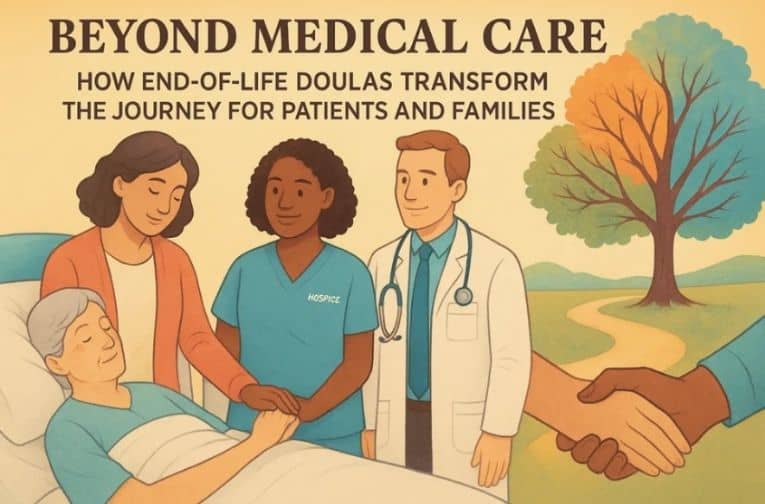
Table of Contents
When Sarah’s father was diagnosed with advanced lung cancer, the hospice team was wonderful. The nurses checked his pain levels, adjusted his medications, and made sure he was comfortable. But Sarah felt lost. She had so many questions that didn’t seem medical. How do we talk to Dad about dying? What if he’s scared? How do we make these last weeks meaningful?
That’s when Sarah met Maria, an end-of-life doula. Maria didn’t come with a medical bag or a medication chart. Instead, she came with time, presence, and a deep understanding of what families go through during this sacred time. While the hospice team focused on Sarah’s father’s physical comfort, Maria helped the whole family navigate the emotional and spiritual journey of saying goodbye.
Medical care is essential, but it’s not everything. Hospice teams do incredible work managing pain, controlling symptoms, and helping the body die naturally with as little distress as possible. But families often need something more—something that goes beyond clinical care.
Think about it this way: when someone is dying, the medical needs are just one piece of a much larger puzzle. Families are dealing with:
Hospice teams are incredibly skilled, but they’re also busy. They have regulations to follow, documentation to complete, and many patients to see. A hospice nurse might spend 30-45 minutes during a visit, focusing primarily on medical assessment and care. This isn’t a flaw in the system—it’s simply the reality of healthcare today.
End-of-life doulas fill this gap. They offer what busy healthcare teams often cannot: extended time, unhurried presence, and focused attention on the emotional and spiritual aspects of dying.
End-of-life doulas offer unique value that complements medical care in three essential ways:
| Benefit | What This Means | How It Helps |
|---|---|---|
| Extended Emotional Support | Doulas can spend hours with families, listening to fears, facilitating difficult conversations, and providing comfort during emotional moments. | Reduces anxiety, improves communication, and helps families process grief together. |
| Trusted Partnership with Healthcare Teams | Doulas work alongside hospice and medical professionals, not in competition with them, filling gaps that clinical care cannot address. | Enhances overall care quality, reduces family stress, and supports medical team goals. |
| Early Life Transition Coaching | Doulas can begin working with families long before hospice is needed, helping with advance planning and emotional preparation. | Creates stronger relationships, reduces crisis-driven decisions, and improves end-of-life experiences. |
The beauty of this partnership is simple: Medical professionals focus on what they do best—managing physical symptoms and clinical care—while doulas focus on what they do best—providing emotional presence and spiritual support. Together, they create a more complete circle of care around patients and families.
This collaborative approach recognizes that dying well involves more than just dying comfortably. It consists of feeling heard, supported, and surrounded by love. It means having time to share stories, express fears, and find meaning in the journey. Most importantly, it ensures that no family has to navigate this profound experience alone.
An end-of-life doula is a trained, non-medical companion who provides emotional, spiritual, and practical support to people who are dying and their families. Think of them as guides who walk alongside families during one of life’s most challenging journeys.
The word “doula” comes from ancient Greek and means “a woman who serves.” Just as birth doulas support families welcoming new life, end-of-life doulas support families as they say goodbye to someone they love.
The core mission is simple but profound: to ensure that no one dies alone and no family navigates the dying process without compassionate support. End-of-life doulas believe that dying is a natural part of living, and they work to make this transition as peaceful and meaningful as possible.
Unlike medical professionals who focus on treating illness or managing symptoms, end-of-life doulas concentrate on the whole person and their relationships. They honor the dying person’s values, beliefs, and wishes while supporting everyone affected by the loss.
End-of-life doulas offer a wide range of services that complement medical care. Here’s what they typically provide:
| Service Area | What This Includes | How It Helps |
|---|---|---|
| Advance Care Planning Support | Help with living wills, healthcare directives, and discussing end-of-life preferences. | Ensures the person’s wishes are known and honored. |
| Emotional Support | Active listening, grief counseling, anxiety management, and family communication. | Reduces fear and helps families process difficult emotions. |
| Vigil Planning | Organizing final days, coordinating family visits, and creating peaceful environments. | Makes the dying process more intentional and less chaotic. |
| Legacy Projects | Recording life stories, creating memory books, and organizing meaningful rituals. | Preserves memories and helps families find meaning. |
| Spiritual Guidance | Supporting personal beliefs, facilitating religious practices, and exploring life’s meaning. | Addresses spiritual needs regardless of faith background. |
One of the most valuable services doulas provide is helping families have difficult conversations about end-of-life preferences. Many people avoid these discussions until it’s too late. Doulas create safe spaces where families can talk openly about:
Doulas don’t provide legal advice, but they can help families understand their options and support them in documenting their wishes through advance directives and living wills.
While hospice nurses check on physical symptoms, doulas focus on emotional well-being. They might sit with someone who’s afraid to die alone, help a daughter find the words to say goodbye to her father, or simply hold space for tears when the medical team has moved on to their next patient.
This emotional support extends to the entire family. Doulas understand that everyone grieves differently and that the dying process affects each person uniquely. They provide individualized support that meets each family member where they are.
Death doesn’t have to be clinical or sterile. Doulas help families create environments that reflect the dying person’s personality and values. This might include:
Doulas often help families create lasting tributes to their loved one’s life. These projects give families something positive to focus on during a difficult time and create treasures they’ll cherish forever. Legacy work might include:
The most significant difference between doulas and healthcare teams is time. While this doesn’t mean doulas have unlimited availability, it does mean they can offer something that busy medical professionals often cannot: unhurried presence.
Healthcare teams work within tight schedules and regulations. A hospice nurse might see seven patients in one day, with specific medical tasks to complete at each visit. This isn’t anyone’s fault—it’s simply how healthcare works today.
Doulas operate differently. They can sit with a family for hours if needed, return multiple times in one day during a crisis, and be present during those long, quiet hours when medical intervention isn’t needed but emotional support is crucial.
When a doula spends extended time with a family, they might:
Doulas never replace medical professionals—they enhance the care team. While doctors and nurses focus on physical comfort and symptom management, doulas focus on emotional and spiritual comfort. This partnership creates a more complete support system.
For example, when a hospice nurse adjusts medication to manage pain, the doula might help the family understand what to expect and provide emotional support during the adjustment period. Both roles are essential, and they work better together.
The goal is always the same: to help people die naturally with as little preventable distress as possible. Medical teams address physical distress, while doulas address emotional and spiritual distress. Together, they honor the whole person during this sacred transition.
This collaborative approach recognizes that comfort care involves more than managing symptoms. True comfort includes feeling heard, supported, and surrounded by love. It means having someone who has time to listen, space to grieve, and permission to experience this profound life transition with dignity and grace.
When someone is facing the end of life, their emotional and spiritual needs often become just as important as their physical comfort. Medical teams excel at managing pain and symptoms, but they may not have the time or training to address the deeper questions that arise: Why is this happening to me? What comes after death? How do I find peace?
End-of-life doulas are specially trained to sit with these difficult emotions and spiritual concerns. They don’t rush to fix or solve problems—they simply provide a safe space for patients to express whatever they’re feeling. This might include:
Spiritual support doesn’t mean pushing religious beliefs. Instead, doulas help patients explore what gives their life meaning and purpose, regardless of their faith background. Some patients find comfort in traditional religious practices, while others discover meaning through nature, relationships, or personal values.
A doula might help a patient:
Sometimes the most healing thing for a dying person is simply having someone listen without judgment. Medical visits often focus on symptoms and treatments, leaving little time for patients to share their deeper concerns. Doulas offer something precious: uninterrupted time to be heard.
When patients feel genuinely listened to, something powerful happens. Their anxiety often decreases, their sense of isolation lessens, and they begin to feel more in control of their experience. This emotional comfort directly supports the hospice goal of reducing preventable distress.
Some of life’s most important conversations happen when someone is dying. These might involve apologies, love, or forgiveness. Doulas understand that these conversations aren’t rushed or scheduled around medical appointments.
Families often struggle with what to say during end-of-life conversations. Doulas can help by:
| Common Communication Challenges | How Doulas Help |
|---|---|
| Family members don’t know what to say | Provide conversation starters and guidance on meaningful topics |
| Patient wants to discuss death, but family avoids the topic | Help family understand the importance of honest communication |
| Unresolved conflicts need addressing | Create safe spaces for difficult but necessary conversations |
| The patient is becoming less responsive | Teach the family how to communicate through touch, presence, and familiar voices |
Medical transitions can be emotionally overwhelming for families. When a patient’s condition changes, new symptoms appear, or treatments are stopped, families need more than clinical explanations—they need emotional support.
Doulas can be present during these transitions to:
This extended presence helps families feel less alone during scary or confusing moments.
Every person dies differently, and every family grieves differently. While medical protocols provide essential structure, doulas offer something equally valuable: completely personalized care that honors each person’s unique needs and preferences.
Medical care usually follows evidence-based protocols that work for most people. Doula care follows the heart and spirit of each individual person. This might mean:
As someone approaches death, their needs change—sometimes day by day or even hour by hour. Medical teams adjust medications and treatments based on clinical indicators. Doulas adjust their support based on emotional and spiritual indicators.
One day, a patient might need someone to listen to life stories; the next, they might prefer quiet companionship; and another day, they might want help addressing family concerns. Doulas adapt their approach to meet whatever need is most pressing.
Small details can make a huge difference in comfort and peace. While medical staff focus on clinical details, doulas pay attention to personal information that enhances quality of life:
These seemingly small touches often mean the world to patients and families.
Family members often feel helpless when someone they love is dying. They want to help but don’t know how. They’re grieving while trying to make crucial decisions. They’re exhausted but afraid to rest. Doulas provide vital support to help family members navigate this incredibly difficult time.
Grief doesn’t wait until after someone dies—it often begins with the terminal diagnosis. Family members may grieve the loss of their loved one’s health, independence, or future plans. They may grieve their own losses—the activities they can no longer share, the conversations that have become difficult, or the roles that are changing.
Doulas understand that this anticipatory grief is normal and healthy. They help family members:
Families face many decisions during end-of-life care, from treatment choices to funeral planning. These decisions feel overwhelming when emotions are high and information is complex. Doulas don’t make decisions for families, but they provide invaluable support during the decision-making process.
This support might include:
Primary caregivers often neglect their own needs while caring for someone who is dying. Doulas recognize that supporting caregivers is essential for supporting patients. They help caregivers:
People die as they lived—influenced by their cultural background, religious beliefs, family traditions, and personal values. Medical care can sometimes feel disconnected from these essential aspects of identity. Doulas work hard to honor each family’s cultural and religious preferences throughout the dying process.
Different cultures have different beliefs about death, dying, and proper end-of-life care. Doulas educate themselves about various cultural traditions to provide respectful, culturally appropriate support. This might include understanding:
Doulas never replace religious or spiritual advisors—they work alongside them. They help coordinate visits from clergy, rabbis, imams, or other spiritual leaders and support families in accessing religious sacraments or rituals that are important to them.
When families have no religious affiliation, doulas still honor their spiritual needs. They understand that spirituality can be expressed through connection to nature, meaningful relationships, personal values, or individual beliefs about life’s purpose.
Cultural background influences how families communicate, make decisions, and express grief. Some cultures value direct, open communication about death, while others prefer more indirect approaches. Some cultures expect extended family involvement in all decisions, while others prioritize the nuclear family or individual autonomy.
Doulas adapt their communication style and support approach to match each family’s cultural preferences. They never impose their own cultural assumptions or try to change how families naturally interact.
When language barriers exist, doulas work creatively to ensure meaningful communication continues. This might involve:
The goal is always to ensure that cultural and religious identity remains honored and integrated throughout the end-of-life experience. This respect for diversity directly supports the hospice principle of treating each person with dignity, allowing them to die in a way that feels authentic to who they are and what they believe.
When families feel that their values and traditions are respected and honored, they experience less emotional distress. Cultural sensitivity is another vital tool in the comprehensive approach to comfort care, addressing not only physical pain but also cultural and spiritual pain.
End-of-life doulas and hospice teams work together like pieces of a puzzle—each brings something essential that the other cannot provide. Think of hospice as the foundation of medical care, while doulas add the emotional and spiritual framework that makes the experience more complete.
Hospice teams are medical experts. They understand diseases, medications, and how to manage physical symptoms. They know how to help the body die naturally with minimal pain and discomfort. Their training focuses on clinical assessment, treatment protocols, and evidence-based care that follows strict medical guidelines.
End-of-life doulas are emotional and spiritual companions. They understand grief, fear, and the human need for connection during life’s most vulnerable moments. Their training focuses on listening, supporting, and creating meaningful experiences that honor each person’s journey.
No single professional can meet every need during end-of-life care. Dying involves complex physical, emotional, spiritual, and social changes that require different types of expertise. When hospice teams and doulas work together, families receive comprehensive support that addresses the whole person—not just their medical condition.
Consider this simple comparison:
| Hospice Focus | Doula Focus | Together They Provide |
|---|---|---|
| Pain management | Emotional comfort | Complete comfort care |
| Symptom control | Spiritual support | Holistic well-being |
| Medical assessment | Life review and meaning-making | Comprehensive evaluation |
| Treatment protocols | Personalized presence | Individualized care |
| Clinical documentation | Legacy projects | Complete care record |
The result is better care for everyone involved. Patients receive both medical expertise and emotional support. Families get both clinical guidance and spiritual comfort. Healthcare teams can focus on their medical expertise while knowing that emotional needs are being met.
Understanding the clear boundaries between doulas and medical professionals is crucial for successful partnerships. These boundaries aren’t barriers—they’re guidelines that ensure everyone can do their best work while keeping patients safe.
Doulas provide non-medical support that enhances comfort care. Their role includes:
Doulas never provide medical care or make medical decisions. They cannot and will not:
When everyone understands these boundaries, trust and collaboration flourish. Hospice teams know that doulas won’t overstep medical boundaries or contradict medical advice. Doulas know they can focus entirely on emotional and spiritual support without feeling pressure to provide medical guidance they’re not qualified to give.
This clarity protects everyone: patients receive appropriate care from qualified professionals, families know who to contact for different needs, and both doulas and medical teams can excel in their respective areas of expertise.
Successful partnerships happen when communication is clear, and roles are respected. Here are examples of how doulas and hospice teams work together effectively:
Situation: An 82-year-old patient with heart failure begins experiencing increased shortness of breath. The family becomes frightened and calls the hospice nurse repeatedly.
Hospice team response: The nurse assesses the patient, adjusts medications to improve breathing comfort, and explains the medical changes to the family.
Doula response: The doula spends extended time with the family, helping them understand what the nurse explained, addressing their emotional fears about the breathing changes, and staying with them during the adjustment period.
Result: The patient receives appropriate medical care while the family feels emotionally supported. The hospice nurse can focus on other patients, knowing the family’s anxiety is being addressed.
Situation: A patient with cancer has an adult daughter who lives nearby and a son who lives across the country. The siblings disagree about treatment decisions and visiting schedules, creating stress for everyone.
Hospice team response: The nurse and social worker provide medical information and help facilitate family meetings about care decisions.
Doula response: The doula works with both siblings separately and together, helping them process their emotions, understand their different grieving styles, and find ways to support each other despite their disagreements.
Result: Medical decisions are made based on clinical expertise while family relationships are preserved and strengthened.
Situation: A patient with advanced dementia is no longer responsive, but family members want to create meaningful experiences during their final days together.
Hospice team response: The nurse ensures the patient is comfortable and pain-free, adjusting care as the condition changes.
Doula response: The doula helps the family plan special activities, such as playing favorite music, reading beloved stories, sharing photo albums, and creating opportunities for different family members to spend private time with their loved one.
Result: The patient receives excellent comfort care while the family creates lasting memories and finds meaning in their final time together.
When doulas work alongside hospice teams, everyone benefits—including the medical professionals themselves. These partnerships create positive changes that improve both job satisfaction and the quality of patient care.
Anxious families often call hospice teams frequently, especially after hours. While some calls involve legitimate medical concerns, many stem from emotional fears that medical professionals aren’t trained to address in depth.
When doulas provide ongoing emotional support, families feel more confident and less panicked. They learn to distinguish between medical emergencies and normal emotional responses to the dying process. This means:
Doulas often serve as bridges between families and medical teams. They help translate complex medical information into understandable terms and help families formulate important questions before medical visits.
Benefits for hospice teams include:
Healthcare professionals entered their fields to help people, but heavy caseloads and time pressures can make it difficult for them to provide the comprehensive support they wish they could. When doulas fill emotional and spiritual gaps, medical teams can focus on their clinical expertise without feeling like they’re leaving critical needs unmet.
This collaboration often results in:
| Challenge Without Doulas | Benefit With Doulas |
|---|---|
| Overwhelmed families making frequent crisis calls | Supported families who understand normal processes |
| Medical staff are feeling pressure to address emotional needs outside their expertise | Clear role division allowing focus on clinical excellence |
| Families who struggle to understand medical information | Better-prepared families with enhanced health literacy |
| Healthcare teams are stretched thin trying to meet all needs | Collaborative care teams with specialized expertise |
Despite clear boundaries, some misconceptions persist about how doulas and medical teams work together. Addressing these misunderstandings helps create stronger partnerships and better patient care.
Reality: Professional doulas never contradict medical advice or interfere with treatment protocols. They work within clearly defined non-medical boundaries and refer all medical questions to appropriate healthcare providers.
When this concern arises, it’s usually because of miscommunication about roles or experience with untrained individuals who call themselves “doulas” without proper education. Professional doulas understand their scope of practice and respect medical expertise.
Reality: Families consistently report that having both medical and emotional support creates a more complete care experience. Physical comfort and emotional comfort work together—neither alone is sufficient for comprehensive end-of-life care.
Research and family feedback show that when both services are available, patients experience:
Reality: While doulas are private-pay services, families often find that the support reduces overall healthcare costs. When families feel emotionally supported and educated, they:
Reality: While anyone can offer basic emotional support, professional doulas receive specialized training in death education, grief support, family dynamics, and cultural sensitivity. They understand the unique challenges of end-of-life care and know how to provide effective support without overstepping professional boundaries.
The difference shows in their ability to:
The best way to address misconceptions is through education and communication. When hospice teams and doulas take time to understand each other’s roles, training, and goals, they discover how much they have in common:
Successful partnerships begin with recognizing that difference doesn’t mean competitiveness. Medical expertise and emotional support expertise are both essential for comprehensive comfort care. When they work together, families receive the complete support they deserve during one of life’s most important transitions.
The ultimate goal remains the same for everyone involved: helping people die naturally with as little preventable distress as possible. Medical teams address physical distress while doulas address emotional and spiritual distress. Together, they create the comprehensive comfort care that honors both the medical reality of dying and the profoundly human experience of saying goodbye.
Early support gives families space, time, and clarity. By meeting a doula while a serious illness is still stable, everyone can:
| Early Engagement Benefits | How It Helps Patients & Families |
|---|---|
| Ongoing guidance | Steady coaching across changing health stages |
| Less decision pressure | Choices made thoughtfully, not urgently |
| Stronger relationships | The end-of-life Doula understands family dynamics and values |
| Consistent messaging | Care plans stay aligned with patient wishes |
Serious illnesses often bring ups and downs. Treatments change, new symptoms appear, and emotions fluctuate. A doula:
Talking about future care while life feels “normal” protects comfort later. Doulas facilitate conversations about:
These plans guide hospice teams later, ensuring the body can die naturally without preventable distress while honoring personal values.
Trust grows through steady, low-pressure meetings:
Because the doula is present before the final decline, loved ones feel comfortable speaking openly when the stakes become high.
When health turns, families face choices about treatments, hospital visits, or when to begin hospice. A doula helps by:
Early coaching doesn’t remove the pain of loss, but it does reduce chaos. Families step into hospice care informed, united, and focused on what matters most—comfort, dignity, and love in life’s final chapter.
End-of-life doulas can provide valuable support at many different stages of a serious illness journey. Understanding when their services might be most helpful can help families make the best decisions for their unique situation.
The moment someone receives a life-limiting diagnosis is often when doula support becomes most valuable. Families are typically overwhelmed with medical information, frightened about the future, and unsure how to navigate this new reality. A doula can help by:
Even when someone is actively receiving treatments like chemotherapy or radiation, doula support can be beneficial. Treatment periods often involve difficult decisions, changing symptoms, and emotional ups and downs. Doulas help families:
Many families first learn about doulas when hospice care starts, and this timing can work well, too. While earlier engagement allows for deeper relationship building, doulas can still provide significant value when they join the care team alongside hospice services. They help families:
Certain situations particularly benefit from doula support:
| Situation | How Doulas Help |
|---|---|
| Family conflict about care decisions | Facilitate communication and help find common ground |
| Patient experiencing anxiety or depression | Provide emotional support and help connect with appropriate resources |
| Caregiver burnout | Offer respite presence and support caregiver well-being |
| Cultural or religious needs are not being met | Help coordinate culturally appropriate care and rituals |
| Unfinished business or relationship repair needed | Create safe spaces for difficult but important conversations |
Families might benefit from doula services when they notice:
The key is recognizing that doula support complements medical care, not replaces it. Families don’t have to choose between medical expertise and emotional support. Both can work together to create comprehensive comfort care.
Understanding what a doula relationship looks like helps families make informed decisions and set appropriate expectations. The doula relationship is unique—it’s professional yet deeply personal, structured yet flexible.
Most doula relationships begin with an initial consultation, during which both parties determine whether they’re a good fit. During this meeting, families can expect the doula to:
This initial meeting is also the family’s opportunity to assess whether this particular doula feels like the right match for their needs and personality.
After deciding to work together, the doula will help the family create a plan that reflects their unique needs and preferences. This planning process typically includes:
Plans remain flexible and can change as the situation evolves, but having a foundation helps everyone understand what to expect.
The heart of doula work happens through ongoing support that adapts to changing needs. Families can expect:
Regular check-ins, weekly, biweekly, or as needed, based on the situation. These might be phone calls, video chats, or in-person visits.
Extended presence during difficult times, such as medical appointments, family meetings, or when symptoms change significantly.
24/7 crisis support availability, though the specific arrangements vary by doula and situation.
Coordination with other care providers to ensure everyone is working toward the same goals.
Flexible service delivery that might include individual support for the patient, family meetings, or group activities, depending on what’s most helpful.
Doula relationships are professional, but they feel more personal than typical healthcare relationships. This is because:
Time constraints are minimal. Unlike medical appointments that follow strict schedules, doulas can spend whatever time is needed for meaningful conversations or support.
Focus is holistic. Rather than addressing specific symptoms or medical issues, doulas address the whole person and their relationships.
Emotional connection is encouraged. While maintaining professional boundaries, doulas develop genuine caring relationships with the families they serve.
Individual attention is prioritized. Each family receives completely personalized care that reflects their unique values, needs, and preferences.
Setting realistic expectations includes understanding what doulas don’t do:
Choosing the right doula involves asking thoughtful questions to ensure the best possible match. These questions help families understand the doula’s approach, experience, and whether their services align with the family’s needs and values.
Understanding a doula’s background helps families make informed decisions:
Since there’s no governing body for end-of-life doulas, asking about training and experience becomes especially important.
| Question Category | Specific Questions to Ask |
|---|---|
| Availability | What are your typical response times? Do you provide 24/7 support? How do you handle emergencies or urgent situations? |
| Communication Style | How do you prefer to communicate between visits? How often do you typically check in with families? What’s your approach to family meetings? |
| Service Scope | What specific services do you provide? What don’t you do? How do you work with hospice teams? Do you attend medical appointments? |
| Personal Approach | How do you handle families with different spiritual beliefs? What’s your philosophy about end-of-life care? How do you support families who are struggling emotionally? |
Understanding the business aspects helps prevent misunderstandings later:
The most skilled doula won’t be helpful if they’re not a good personal fit for the family:
Understanding how doulas handle urgent situations provides peace of mind:
Remember that interviews work both ways. A professional doula will also ask questions to determine whether they can effectively meet the family’s needs. This mutual assessment helps ensure successful partnerships.
Healthcare professionals play a crucial role in helping families discover doula services and creating successful collaborative relationships. Understanding how to make effective referrals and work together benefits everyone involved.
Healthcare professionals are often the first to recognize when families might benefit from doula support. Key indicators include:
Emotional distress that exceeds normal grief responses, such as overwhelming anxiety, family conflict about care decisions, or patient depression that affects their ability to engage in medical care.
Frequent non-medical calls or visits where families seek reassurance about normal dying processes or want to discuss fears and concerns that don’t require clinical intervention.
Cultural or spiritual needs that go beyond what medical teams can address, such as specific rituals, legacy projects, or religious considerations.
Complex family dynamics that interfere with medical decision-making or create barriers to effective care.
Desire for enhanced end-of-life experiences such as vigil planning, memory creation, or meaningful ritual development.
When referring families to doula services, healthcare professionals can enhance success by:
Explaining the complementary nature of doula services. Emphasize that doulas work alongside medical teams, not instead of them. This reduces fears about conflicting advice or role confusion.
Timing referrals appropriately. While doulas can help at any stage, earlier referrals allow for better relationship building and more comprehensive support.
Providing educational materials about what doulas do and how they complement medical care. Many families have never heard of end-of-life doulas and need basic information.
Offering multiple options when possible. Different doulas have different approaches, and families benefit from being able to choose someone who feels like the right fit.
Following up on referrals to ensure families can connect with doula services and that the collaboration is working well.
Successful collaboration requires clear communication and mutual respect between healthcare professionals and doulas:
| Collaboration Element | How It Works | Benefits |
|---|---|---|
| Role Clarification | Clear understanding of who provides what services and when | Prevents confusion and ensures appropriate care |
| Communication Protocols | Regular updates about patient/family status and needs | Keeps everyone informed and aligned |
| Shared Goals | Agreement on primary objectives for patient and family care | Ensures all efforts support the same outcomes |
| Professional Respect | Recognition of each team member’s expertise and value | Creates positive working relationships |
Effective communication between healthcare professionals and doulas enhances care quality:
Include end-of-life doulas in care plan discussions when families consent to their involvement. Their insights about family dynamics and emotional needs can inform medical decision-making.
Share relevant information about changes in the patient’s condition, family concerns, or care transitions that may affect the doula’s support approach.
Coordinate timing for family meetings, difficult conversations, or significant care changes so doulas can provide appropriate support.
Respect confidentiality when sharing information essential to collaborative care. Both medical professionals and doulas have professional obligations to protect patient privacy.
Address conflicts promptly if disagreements arise about care approaches or role boundaries. Open communication usually resolves misunderstandings quickly.
Healthcare organizations can strengthen doula partnerships by:
Providing education to staff about doula services and how they complement medical care. Understanding reduces resistance and improves referral quality.
Creating referral resources such as lists of local doulas with information about their training, experience, and approach.
Establishing protocols for doula involvement in care planning, family meetings, and communication between visits.
Gathering feedback from families about their experiences with doula services to continuously improve referral processes.
Considering policy development that formally recognizes doulas as part of the extended care team while maintaining appropriate boundaries.
Understanding potential challenges helps prevent problems:
Scope-of-practice concerns can be addressed through clear education about doula training and role boundaries. Professional doulas understand their limitations and respect medical expertise.
Communication gaps often occur when team members don’t know how to contact each other or when to share information. Establishing clear protocols prevents these issues.
Philosophical differences about end-of-life care can usually be resolved through discussion of shared goals: patient comfort, family support, and a dignified death experience.
Time and resource constraints in healthcare settings can make collaboration feel burdensome. However, effective doula partnerships often reduce demands on medical staff by addressing family emotional needs independently.
Indicators of effective healthcare-doula partnerships include:
The ultimate goal is creating seamless support that addresses all aspects of comfort care—physical, emotional, and spiritual. When healthcare professionals and doulas work together effectively, families receive the comprehensive support they deserve during one of life’s most important transitions.
This collaborative approach honors the hospice principle of helping people die naturally with minimal preventable distress by ensuring that both medical and emotional sources of distress are addressed by qualified professionals working in partnership.
End-of-life doulas bring transformative value that enhances the entire end-of-life care experience. When we look at the complete picture, three significant benefits emerge that improve outcomes for everyone involved.
Understanding what end-of-life doulas actually do changes everything. Many families and healthcare professionals have never heard of doulas or don’t understand how they complement medical care. When awareness increases, families make more informed choices about their end-of-life support.
Doulas provide what busy medical teams often cannot:
This awareness empowers families to seek comprehensive support that addresses not only physical comfort but also emotional and spiritual comfort. The result is a more complete approach to comfort care that truly honors the whole person.
The most significant shift happens when healthcare professionals recognize doulas as partners rather than competitors. This partnership mentality transforms the entire care experience.
Clear role boundaries create successful collaboration:
| Medical Team Focus | Doula Focus | Partnership Result |
|---|---|---|
| Physical symptom management | Emotional and spiritual support | Complete comfort care |
| Clinical assessment and treatment | Personal presence and listening | Holistic patient evaluation |
| Medical protocols and documentation | Legacy projects and meaning-making | Comprehensive care records |
| Regulated visit schedules | Flexible time and availability | Continuous support coverage |
When partnerships work well, everyone benefits: patients receive both medical expertise and emotional support, families feel entirely supported, and healthcare teams can focus on their clinical strengths while knowing emotional needs are being met.
This collaboration reduces family anxiety, decreases non-medical crisis calls, and improves overall satisfaction with end-of-life care. Most importantly, it ensures that the hospice goal of reducing preventable distress is achieved through addressing both physical and emotional sources of suffering.
The most significant untapped potential lies in engaging doulas early—long before hospice care is needed. This early intervention creates the strongest foundation for peaceful end-of-life experiences.
Early engagement provides:
When families work with doulas early, they enter hospice care with:
This early coaching approach prevents crisis-driven decisions and creates more intentional, meaningful end-of-life experiences for everyone involved.
The evidence is clear: end-of-life doulas enhance rather than complicate medical care. Now it’s time for healthcare professionals to embrace this partnership and help families access the comprehensive support they deserve.
Hospice teams already understand that dying well involves more than managing physical symptoms. Doulas simply extend this philosophy by addressing the emotional and spiritual aspects of comfort care that time constraints make difficult for medical teams to provide.
Consider these practical steps:
Remember: doulas don’t replace any part of medical care—they enhance it. They help families understand and appreciate the excellent medical care you provide while filling gaps that clinical care cannot address.
Healthcare organizations can lead the way in creating more comprehensive end-of-life care by recognizing and supporting doula partnerships.
Organizational support might include:
Every healthcare professional can take simple steps to support better end-of-life care:
Start by asking families about their emotional and spiritual needs, as well as their medical concerns. When families express needs beyond medical care, consider whether doula services could help.
Learn about local doula resources so you can provide accurate information when families ask questions.
Communicate openly with doulas when they’re involved in your patients’ care. Share relevant information and coordinate timing for essential conversations or care transitions.
Advocate for policies that recognize and support comprehensive end-of-life care that includes both medical and emotional support.
Families don’t have to choose between excellent medical care and emotional support—they can have both. Understanding doula services empowers families to create the most comprehensive care experience possible.
Don’t wait for a crisis to seek support. Consider engaging a doula early in the illness journey when there’s time to build relationships and plan thoughtfully for whatever lies ahead.
Ask your healthcare team about doula services if you feel like something is missing from your care experience. Professional healthcare providers should welcome questions about comprehensive support options.
Imagine an end-of-life care system where every family has access to both medical expertise and emotional support. This isn’t just an idealistic dream—it’s an achievable goal that benefits everyone involved.
In a truly comprehensive system, end-of-life care would include:
Medical excellence is provided by skilled healthcare teams who focus on physical comfort, symptom management, and helping the body die naturally with minimal distress.
Emotional and spiritual support is provided by trained doulas who focus on the human experience of dying, family relationships, and creating meaning during life’s final transition.
Cultural competence that honors diverse backgrounds, beliefs, and traditions throughout the dying process.
Early intervention that begins support long before crises, allowing for thoughtful planning and relationship building.
Family-centered approaches that recognize that end-of-life experiences affect entire family systems, not just individual patients.
Community partnerships that make these comprehensive services accessible to families regardless of their financial resources.
When end-of-life care becomes truly comprehensive, the benefits extend far beyond individual families:
Healthcare teams experience greater job satisfaction because they can focus on their clinical expertise while knowing that qualified professionals are meeting emotional and spiritual needs.
Families report higher satisfaction with their end-of-life experiences because all aspects of comfort are addressed.
Communities develop healthier relationships with death and dying as more families experience peaceful, meaningful end-of-life transitions.
Healthcare costs may decrease as families feel more supported and make fewer crisis-driven decisions about care.
Professional burnout among healthcare workers may be reduced as the emotional burden of comprehensive support is shared across specialized team members.
Creating comprehensive, compassionate end-of-life care requires collaboration among many different groups:
Healthcare professionals who embrace partnership and recognize that different types of expertise strengthen rather than threaten their work.
End-of-life doulas who maintain clear professional boundaries while providing excellent emotional and spiritual support.
Healthcare organizations that support policies and practices recognizing comprehensive care as the standard, not the exception.
Communities that invest in making these services accessible to all families, not just those who can afford private-pay support.
Families themselves who advocate for the comprehensive support they need and deserve during life’s most important transitions.
The growing recognition of end-of-life doulas represents a cultural shift toward more humane, comprehensive end-of-life care. This isn’t about replacing anything that works well in our current system—it’s about enhancing what we already do well by filling gaps that have existed too long.
Every person deserves to die with dignity, comfort, and support. Medical teams provide essential physical comfort. End-of-Life Doulas provide important emotional and spiritual comfort. Together, they create the comprehensive support that honors the whole human experience of dying.
The partnerships are already forming. Progressive healthcare organizations, forward-thinking medical professionals, and families seeking better care are discovering how well doulas and medical teams work together. The question isn’t whether this collaboration will happen—it’s how quickly we can make it available to everyone who needs it.
This vision of comprehensive, compassionate end-of-life care is within reach. It requires healthcare professionals who are willing to embrace partnership, doulas who maintain professional boundaries while providing excellent support, and communities that prioritize making comprehensive care accessible to all families.
The result will be end-of-life experiences that truly honor the whole person—body, mind, and spirit—while supporting the families who love them through one of life’s most profound transitions. This is the future of end-of-life care, and it begins with each of us choosing collaboration over competition, partnership over isolation, and comprehensive support over fragmented services.
Together, we can ensure that no one dies alone and no family navigates the end-of-life journey without the complete support they deserve. The untapped potential of end-of-life doulas is really the untapped potential for all of us to create better, more compassionate care for the people we serve.
The ‘Untapped’ Potential of End-of-Life Doulas
📚 This site uses Amazon Associate links, which means I earn a small commission when you purchase books or products through these links—at no extra cost to you. These earnings help me keep this website running and free from advertisements, so I can continue providing helpful articles and resources at no charge.
💝 If you don’t see anything you need today but still want to support this work, you can buy me a cup of coffee or tea. Every bit of support helps me continue writing and sharing resources for families during difficult times. 💙
Bridges to Eternity: The Compassionate Death Doula Path book series:
Additional Books for End-of-Life Doulas
VSED Support: What Friends and Family Need to Know
Find an End-of-Life Doula
At present, no official organization oversees end-of-life doulas (EOLDs). Remember that some EOLDs listed in directories may no longer be practicing, so it’s important to verify their current status.
End-of-Life Doula Schools
The following are end-of-life (aka death doula) schools for those interested in becoming an end-of-life doula:
The International End-of-Life Doula Association (INELDA)
University of Vermont. End-of-Life Doula School
Kacie Gikonyo’s Death Doula School
Laurel Nicholson’s Faith-Based End-of-Life Doula School
National End-of-Life Doula Alliance (NEDA) – not a school, but does offer a path to certification
Remember that there is currently no official accrediting body for end-of-life doula programs. It’s advisable to conduct discovery sessions with any doula school you’re considering—whether or not it’s listed here—to verify that it meets your needs. Also, ask questions and contact references, such as former students, to assess whether the school offered a solid foundation for launching your own death doula practice.
Holistic Nurse: Skills for Excellence book series
Empowering Excellence in Hospice: A Nurse’s Toolkit for Best Practices book series
Articles on Advance Directives
CaringInfo – Caregiver support and much more!
The Hospice Care Plan (guide) and The Hospice Care Plan (video series)
Surviving Caregiving with Dignity, Love, and Kindness
Caregivers.com | Simplifying the Search for In-Home Care
Geri-Gadgets – Washable, sensory tools that calm, focus, and connect—at any age, in any setting
Healing Through Grief and Loss: A Christian Journey of Integration and Recovery
📚 This site uses Amazon Associate links, which means I earn a small commission when you purchase books or products through these links—at no extra cost to you. These earnings help me keep this website running and free from advertisements, so I can continue providing helpful articles and resources at no charge.
💝 If you don’t see anything you need today but still want to support this work, you can buy me a cup of coffee or tea. Every bit of support helps me continue writing and sharing resources for families during difficult times. 💙
VSED Support: What Friends and Family Need to Know
Take Back Your Life: A Caregiver’s Guide to Finding Freedom in the Midst of Overwhelm
The Conscious Caregiver: A Mindful Approach to Caring for Your Loved One Without Losing Yourself
Everything Happens for a Reason: And Other Lies I’ve Loved
Final Gifts: Understanding the Special Awareness, Needs, and Communications of the Dying