When Crisis Forces the Decision: Why Emergency Rooms and ICUs Are the Wrong Place to Discuss Your End-of-Life Wishes
Published on January 12, 2026
Updated on January 7, 2026
Published on January 12, 2026
Updated on January 7, 2026

Table of Contents
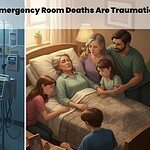
The call comes at 2 a.m. Your father collapsed at home. The ambulance rushed him to the emergency room. Now, a doctor you’ve never met asks if your dad would want to be resuscitated if his heart stops. Would he want a breathing tube? A feeding tube? You have minutes to decide, and you have no idea what he would want.
This scenario plays out in emergency departments and intensive care units worldwide every single day. When someone arrives unable to speak for themselves, healthcare professionals turn to family members for guidance about life-or-death decisions. Research shows that these critical conversations happen far too late—when emotions run high, time runs short, and the stakes couldn’t be higher. Healthcare professionals often lack the legal knowledge needed for end-of-life decision-making, relying instead on clinical judgment and what they perceive as the patient’s best interest rather than following established legal frameworks.
This isn’t just an Australian problem or an American problem. It’s a global crisis in healthcare. The pattern repeats across continents: patients and families expect doctors to initiate conversations about advance care planning and treatment goals, but many healthcare professionals lack the confidence or time to start these discussions. So the conversations get delayed until they become unavoidable—in the emergency room or ICU, when someone can no longer speak for themselves.
If you’re 18 or older, this matters to you. Right now. Not someday when you’re elderly or sick, but today. Because accidents happen, strokes happen. Sudden illnesses happen. The time to have these essential conversations is before crisis forces them—when you can think clearly, discuss thoroughly, and document your wishes properly.
When you arrive at an emergency department unconscious or unable to communicate, someone must make decisions about your care. But who gets to decide? The answer might surprise you.
Research reveals significant gaps in healthcare professionals’ legal knowledge when it comes to end-of-life decision-making. Rather than relying on established legal frameworks and advance directives, decisions are often guided by clinical judgment and what healthcare providers perceive as in the patient’s best interest. This happens even when legal documents exist that clearly state the patient’s wishes.
The problem starts with a waiting game that nobody wins. Patients and families expect healthcare professionals to initiate conversations about advance care planning and goals of treatment. That expectation makes sense—doctors and nurses are the medical experts, after all. But here’s the reality: many healthcare professionals don’t have the confidence to start these discussions. They weren’t trained for these conversations in medical school. They don’t have time during busy shifts. They worry about taking away hope or upsetting families.
So doctors wait for families to bring it up. Families wait for doctors to bring it up. And the conversation gets delayed until a crisis forces it.
When that crisis arrives, decision-making defaults to “best interest” standards. Healthcare providers make educated guesses about what you would want based on your medical condition, your prognosis, and what they think most people would choose. Your family members, caught off-guard and emotionally overwhelmed, try to guess what you would want them to decide.
This system fails everyone. Healthcare providers carry the burden of making decisions without clear guidance. Family members carry guilt about whether they chose correctly. And patients—you—may receive care that doesn’t align with your values, beliefs, or wishes.
The irony is painful. Legal frameworks exist specifically to prevent this situation. Advance directives, living wills, and healthcare power of attorney documents create clear pathways for decision-making when someone cannot speak for themselves. But these tools only work if people create them before they’re needed—and if healthcare professionals know they exist and how to use them.
Creating advance directives isn’t about checking boxes on a form. Comprehensive advance care planning requires thoughtful conversations about eight essential healthcare decisions that could arise at the end of life.
These aren’t simple yes-or-no questions. Each decision involves complex medical, ethical, and personal considerations that deserve careful thought and discussion:
Code status and resuscitation involve understanding what CPR actually means—chest compressions that can break ribs, electric shocks to restart your heart, and breathing tubes inserted while you’re unconscious. You need to know the survival rates and likely outcomes for someone with your specific health conditions.
Breathing support ranges from non-invasive oxygen masks to mechanical ventilators that breathe for you. Each option carries different implications for your comfort, communication, and quality of life.
Artificial nutrition involves feeding tubes placed through your nose, into your stomach, or directly into your bloodstream. Many people don’t realize that artificial nutrition near the end of life can sometimes cause more discomfort than it relieves.
Artificial hydration involves IV fluids when you can no longer drink liquids by mouth. Like artificial nutrition, this intervention affects your body in ways that matter at the end of life—sometimes causing fluid buildup, swelling, and other complications.
Antibiotics treat infections, but near the end of life, they raise questions about prolonging dying rather than extending living. Some people want all infections treated aggressively. Others prefer comfort-focused care.
Dialysis becomes a critical decision if your kidneys fail. This time-intensive treatment requires multiple sessions per week and significantly impacts your daily life and energy levels.
Medical interventions encompass everything from blood transfusions to surgical procedures to ICU-level intensive care. The question isn’t just what’s medically possible, but what aligns with your goals and values.
Pain management involves choices about medications, their side effects, and the balance between comfort and alertness. Some people want maximum pain relief even if it means being sedated. Others prefer to remain alert even if that means tolerating some discomfort.
These eight decisions require you to think deeply about what makes life meaningful to you. What would make continued medical treatment worthwhile? At what point would aggressive interventions cause more burden than benefit? What matters most to you—length of life or quality of life?
Checkbox forms cannot capture this complexity. A form that asks “Do you want CPR: yes or no?” doesn’t help you understand what CPR involves, when it works, when it doesn’t, or how to make an informed choice based on your specific situation and values. True advance care planning requires conversations—with your loved ones, with healthcare providers who can explain medical realities, and with yourself about what matters most.
The emergency physician who asks about your father’s wishes isn’t avoiding these conversations because they don’t care. Systemic issues create barriers that prevent even the most compassionate healthcare providers from having the discussions that matter most.
Time is the first obstacle. Emergency departments operate in controlled chaos. Nurses juggle multiple critically ill patients simultaneously. Doctors move rapidly from one urgent situation to the next. The average emergency department visit lasts hours, but actual face-to-face time with a physician often totals just minutes. Meaningful conversations about values, goals, and end-of-life wishes require time that simply doesn’t exist in emergency settings.
Intensive care units face similar constraints. Critical care physicians manage life-threatening situations where every minute counts. The pressure to act quickly—to stabilize, to treat, to save—leaves little room for the slow, thoughtful discussions that advance care planning requires.
Lack of confidence compounds the time problem. Medical schools teach diagnosis and treatment. They teach anatomy and pharmacology. But many programs offer minimal training in having difficult conversations about death and dying. Doctors graduate with extensive knowledge about how to keep people alive but limited skills in discussing when aggressive life-sustaining treatment might cause more harm than good.
This training gap isn’t about intelligence or competence. It reflects a medical culture that views death as failure. From the first day of medical school, healthcare providers learn to fight disease, to cure illness, and to save lives. Death represents the enemy to be defeated. This culture drives incredible medical advances and motivates healthcare providers to exhaust every possible treatment option.
But it also creates a dangerous default: when in doubt, do everything. Without clear advance directives stating otherwise, the medical system defaults to maximum intervention. Full resuscitation attempts. Breathing machines. Feeding tubes. Intensive care. Every available tool gets deployed to extend life, regardless of quality or patient preference.
For some patients, aggressive treatment aligns perfectly with their wishes. They want every possible chance at survival, every available intervention, every extra day of life, regardless of the circumstances. And they have every right to choose that path.
But for others, the default aggressive treatment creates immense suffering. Patients who would have chosen comfort-focused care instead endure painful procedures, uncomfortable interventions, and prolonged dying in intensive care units instead of peaceful deaths surrounded by loved ones. Their final days involve more medical technology and less human connection than they would have wanted.
The tragedy is that nobody intended this outcome. The healthcare team believed they were doing the right thing. The family, thrust into crisis-mode decision-making, defaulted to “do everything” because that felt like the only acceptable choice in the moment. And the patient, who never had these crucial conversations, never got the chance to say what they actually wanted.
Imagine making the most critical decision of your life while exhausted, terrified, and grief-stricken. Now imagine making that decision for someone else—someone you love desperately—with incomplete information and no time to think.
This is the reality of end-of-life decision-making in emergency departments and ICUs.
Crisis situations impair our ability to think clearly. When your loved one’s life hangs in the balance, your brain shifts into fight-or-flight mode. Stress hormones flood your system. Your heart races. Your thoughts scatter. This physiological response helped our ancestors escape predators, but it actively interferes with the careful, rational decision-making required for medical choices.
The emotional state of families in emergency settings adds another layer of difficulty. Shock, fear, grief, and guilt swirl together. You’re trying to process what’s happening while simultaneously being asked to make irreversible decisions. Some family members cling to hope, even when doctors say there is none. Others immediately jump to worst-case scenarios. Everyone processes a crisis differently, which can lead to conflict among family members at the worst possible time.
The pressure to decide immediately intensifies everything. Doctors need answers now. Do we intubate? Do we start CPR? Do we pursue aggressive treatment or shift to comfort care? These questions demand immediate responses, but their implications last forever. There’s no time to research options, to consult with other family members who live far away, to sleep on it and see how you feel in the morning.
You’re making decisions without complete information. You don’t know what your loved one would want because you never asked. They never told you. The conversation felt too uncomfortable, too morbid, too much like giving up hope. So you’re left guessing—playing out conversations in your head, trying to remember offhand comments they made, searching for clues about what they would choose.
This differs fundamentally from thoughtful advance care planning. When you discuss these decisions before a crisis:
The real-world implications of crisis-driven decisions are profound. Studies show that family members who make end-of-life decisions without clear advance directives often experience lasting guilt, anxiety, and depression. They wonder if they chose correctly. They replay the moment endlessly, questioning whether they honored their loved one’s wishes or imposed their own. Some family members develop complicated grief that interferes with their ability to heal and move forward.
Meanwhile, patients may receive care that doesn’t reflect their values. Someone who would have chosen comfort and dignity might instead experience a prolonged death involving painful interventions. Someone who would have wanted every possible treatment might have life support withdrawn too quickly because family members assumed they wouldn’t want to “suffer.”
The emergency room and ICU are designed to save lives in crisis. They excel at that mission. But they are fundamentally the wrong environment for the nuanced, values-based conversations that should guide end-of-life care. These discussions deserve better—calmer settings, adequate time, complete information, and the participation of the person whose life is at stake.
| Factor | DIY Free Resources | Online Legal Services | Elder Law Attorney | Health and Life Navigation Specialist |
|---|---|---|---|---|
| Cost | $0.00 | $49-$199 | $6,000-$12,000 | $150-$2,000 |
| Time Investment | 1-2 hours alone | 1-3 hours alone | 2-4 hours with an attorney | 1.5-6 hours with a coach |
| Ongoing Support | Not Applicable | No | Sometimes | Always |
| Financial POA | Must find and file separately | Sometimes | Yes | Yes |
| Estate Planning Integration | None | None | Comprehensive | Basic |
| Legal Validity | Yes, if properly executed | Yes | Yes | Yes |
| Values Exploration | None | None | Limited | Extensive |
| Medical Guidance (Impact of Decisions) | None | None | Rarely | Comprehensive |
| Treatment-Specific Guidance | None | None | None | Comprehensive |
| Pain Management Detail | None | None | None | Extensive |
| Additional addendums for dementia, mental health, and VSED | None | None | Rarely | Always |
| Family Facilitation | None | None | Sometimes | Always |
| Vetting Required | Not Applicable | Personal research | Personal research, licensing | Testimonials and interviews |
| Best For | Medical professionals with clear preferences | Simple situations, budget-conscious | Complex estates, anticipated legal challenges | Most adults seeking comprehensive guidance |
Whichever pathway you choose, the important thing is that you choose one—and that you do it before crisis forces the conversation.
You’ve read this far. You understand the problem. You know that emergency rooms and ICUs cannot provide the time, space, or circumstances for the conversations that matter most. So what happens next?
The answer is simple: you begin. Not someday. Not when you’re older or sicker. Now. This week. These conversations don’t require perfection. They need a start.
Begin with yourself. Spend time thinking about what matters most to you. What makes life meaningful? At what point would medical interventions create more burden than benefit? Who do you trust to speak for you if you cannot speak for yourself? These aren’t comfortable questions, but they’re important ones.
Then talk to the people who love you. Tell your spouse, your adult children, your siblings, your closest friends. Share your values and your wishes. Let them ask questions. Listen to their concerns. These conversations might feel awkward at first, but they’re profound acts of love. You’re giving your loved ones the gift of certainty—the knowledge that they’ll honor your wishes because they know what those wishes are.
If you’re a family member or caregiver, initiate these conversations with your loved ones. Don’t wait for them to bring it up. Ask the questions that matter: “What would make life worth living for you? What would you want if you couldn’t speak for yourself? Who should make decisions on your behalf?” Your willingness to have these conversations creates space for honesty and clarity.
Having up-to-date advance care plans protects everyone. It protects you by ensuring your wishes guide your care. It protects your loved ones from the crushing burden of guessing what you would want. It protects healthcare providers by providing clear direction on your goals and preferences.
This isn’t about giving up hope. It isn’t about focusing on death. It’s about living fully, with the confidence that comes from having your affairs in order. It’s about maintaining control over your own story, including its final chapters. It’s about respecting yourself enough to make these decisions thoughtfully, rather than leaving them to be made frantically in a crisis.
The gift you give isn’t just to yourself. You give clarity to those who love you—the precious knowledge that when crisis comes, they’ll know exactly what you would want. They won’t have to guess. They won’t have to carry guilt. They’ll have your voice, your values, and your wishes to guide them, even when you cannot speak the words yourself.
Start today. Have the conversation. Create the plan. Give yourself and your loved ones the peace of mind that comes from knowing that when crisis strikes—and it will, for all of us eventually—the decisions won’t be made in panic in an emergency room. They’ll reflect the thoughtful, deliberate choices you made when you had the time, information, and clarity to choose wisely.
That’s the difference between crisis and planning. Between guessing and knowing. Between burden and gift. The choice is yours.
Deciding who decides. How are decisions about care at the end-of-life made in ED and ICU?
When Treatment Conflicts with Values: Why Planning Your Care Goals Before Illness Is Critical
When Death Comes Unexpectedly: Why Being Prepared Matters More Than Ever
The Adult Priority You Can’t Afford to Skip: Your Complete Advance Directive
Articles on Advance Directives
CaringInfo – Caregiver support and much more!
The Hospice Care Plan (guide) and The Hospice Care Plan (video series)
Surviving Caregiving with Dignity, Love, and Kindness
Caregivers.com | Simplifying the Search for In-Home Care
Geri-Gadgets – Washable, sensory tools that calm, focus, and connect—at any age, in any setting
Healing Through Grief and Loss: A Christian Journey of Integration and Recovery
📚 This site uses Amazon Associate links, which means I earn a small commission when you purchase books or products through these links—at no extra cost to you. These earnings help me keep this website running and free from advertisements, so I can continue providing helpful articles and resources at no charge.
💝 If you don’t see anything you need today but still want to support this work, you can buy me a cup of coffee or tea. Every bit of support helps me continue writing and sharing resources for families during difficult times. 💙
VSED Support: What Friends and Family Need to Know
Take Back Your Life: A Caregiver’s Guide to Finding Freedom in the Midst of Overwhelm
The Conscious Caregiver: A Mindful Approach to Caring for Your Loved One Without Losing Yourself
Everything Happens for a Reason: And Other Lies I’ve Loved
Final Gifts: Understanding the Special Awareness, Needs, and Communications of the Dying
Compassion Crossing Academy — free and paid online courses that teach caregivers and healthcare professionals how to coordinate complex care with confidence.
Bridges to Eternity: The Compassionate Death Doula Path book series:
Additional Books for End-of-Life Doulas
VSED Support: What Friends and Family Need to Know
Find an End-of-Life Doula
At present, no official organization oversees end-of-life doulas (EOLDs). Remember that some EOLDs listed in directories may no longer be practicing, so it’s important to verify their current status.
End-of-Life Doula Schools
The following are end-of-life (aka death doula) schools for those interested in becoming an end-of-life doula:
Remember that there is currently no official accrediting body for end-of-life doula programs. Certification only means one graduated from a program. It’s advisable to conduct discovery sessions with any death doula school you’re considering—whether or not it’s listed here—to verify that it meets your needs. Also, ask questions and contact references, such as former students, to assess whether the school offered a solid foundation for launching your own death doula practice.