Before the Crisis: How Hospice Providers Can Partner With Hospitals to Find Patients Earlier
Published on
Updated on

Guiding Life's Journey with Care
Guiding Life's Journey with Care
Published on
Updated on
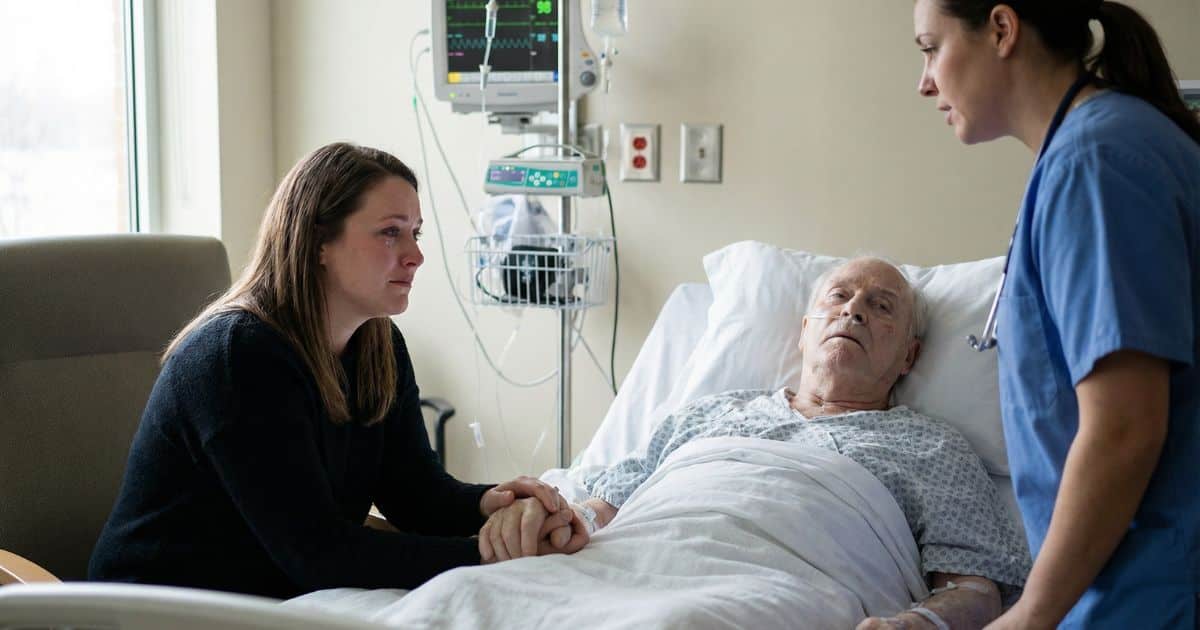
Table of Contents
Most hospice patients arrive following a hospital discharge, in the middle of a medical crisis, already dying within days or even hours. Any hospice provider can change this pattern by building partnerships with local hospitals, skilled nursing facilities, and the medical records teams who hold the key to earlier identification.
Picture this scene.
A daughter sits beside her father’s hospital bed as the discharge planner mentions hospice for the first time. He’s 82, has advanced heart failure, and barely survived his fourth hospitalization this year. The family has 48 hours with him after enrollment. No time to adjust his medications to reduce the fluid crushing his lungs, no weeks to help him record messages for his grandchildren, no months to prepare his wife for the practicalities of living alone after 58 years of marriage.
This happens thousands of times every day across America.
Patients arrive too sick to benefit from symptom management that could have eased their breathing weeks earlier, too exhausted for the spiritual support they desperately needed, too close to death for families to access respite care that might have prevented caregiver collapse. The grief afterward carries a particular weight—families haunted by what might have been possible if they’d known sooner, if someone had identified their loved one’s eligibility before the final crisis.
CommonSpirit Health at Home CEO Trisha Crissman has outlined a strategy that any hospice provider can replicate, regardless of size or budget. Her organization is deploying eligibility triggers in electronic health records that automatically flag patients whose declining trajectories suggest they might qualify for hospice services. They’re working directly inside physician clinics, specialty practices, and ambulatory centers where patients receive ongoing care.
The technology already exists in most healthcare systems.
Medical records personnel can configure alerts based on specific criteria: repeated hospitalizations for the same condition, declining functional status documented across multiple visits, combinations of diagnoses indicating life-limiting illness, and medication patterns suggesting disease progression. These aren’t expensive artificial intelligence systems—they’re practical applications of data that healthcare organizations already collect.
Crissman’s team also places patient navigators directly in clinical settings where they can review flagged records, consult with treating physicians, and initiate conversations about hospice eligibility before the next emergency department visit. Navigators build relationships with clinic staff, making it easier for busy physicians to refer appropriate patients.
Crissman describes the transformation as creating a “womb-like envelope” around patients who are navigating difficult healthcare decisions during uncertain times. Early enrollment means hospice teams can prevent the next crisis rather than simply responding to one that’s already happened.
Consider the difference.
A patient enrolled six months before death has time for her hospice nurse to recognize subtle changes in her breathing pattern, adjust her diuretic dosage, and prevent the fluid overload that would have sent her back to the emergency room. Her chaplain visits regularly enough to help her work through complicated feelings about her estranged son, giving her months to decide whether she wants to reach out before she dies. Her social worker connects her husband with a caregiver support group where he learns practical strategies from others who understand what he’s facing, reducing his isolation and preparing him for the changes ahead.
The interdisciplinary team has space to build trust, discover what matters most to this particular patient, and deliver the comprehensive care they are trained to provide.
Earlier hospice enrollment creates ripple effects throughout healthcare systems. Patients who receive timely hospice services have significantly fewer emergency department visits in their final months, reducing strain on already overwhelmed emergency services. They experience shorter hospital stays when acute care is necessary, freeing beds for other patients.
Healthcare costs drop measurably. Hospital administrators notice improved quality metrics and better family satisfaction scores. These outcomes make hospitals eager to partner with hospice providers that can demonstrate their impact on the broader system.
Hospice staff experience something else entirely—the fulfillment that comes from delivering care the way they envisioned when they entered this field. Nurses have time to teach families comfort-care techniques, proactively manage complex symptoms, and witness meaningful moments when patients aren’t fighting for every breath. Social workers can address anticipatory grief, facilitate family meetings to resolve conflicts, and ensure advance directives reflect patients’ actual wishes.
Start with a conversation.
Hospice providers can approach hospital case managers and discharge planners with specific data about readmission rates for patients with life-limiting illnesses, offering to collaborate on earlier identification. Provide examples of how eligibility triggers work in electronic health records to make the technical implementation feel manageable rather than overwhelming.
Skilled nursing facility administrators face similar pressures around repeated hospitalizations and emergency transfers. Demonstrate how partnering with hospice providers can stabilize their sickest residents, improve quality indicators, and reduce costly acute-care episodes.
Medical records teams need clear criteria for configuring alerts: Which diagnoses trigger review? What combination of declining functional assessments should generate flags? How often should the system run these checks? Work collaboratively to refine the parameters, recognizing that the first iteration won’t be perfect but will improve through ongoing adjustment.
The goal isn’t perfection—it’s creating systems that identify even 20% more eligible patients before they’re actively dying.
Hospice providers: Schedule meetings with your local hospital’s quality improvement director and palliative care team leader. Bring data on the average length of stay for hospice patients, readmission rates, and family satisfaction scores. Ask about their current challenges with high-utilizing patients who have life-limiting conditions.
Hospital administrators: Identify five diagnoses that generate the most repeat admissions in your facility. Pull six months of data. Request a meeting with hospice providers in your community to discuss collaborative strategies for identifying patients.
Skilled nursing facility leaders: Review your emergency transfer logs for patterns. Which residents return repeatedly? What might earlier hospice involvement have changed? Reach out to local hospice medical directors to explore partnership possibilities.
Medical records staff: Begin mapping your current EHR capabilities for generating alerts based on diagnosis codes, functional status changes, and utilization patterns. Document what’s possible with existing technology before assuming you need new systems.
Monday morning starts now.
CommonSpirit Health at Home’s ‘Aggressive’ Hospice Growth Strategy for 2026 and Beyond
One-to-One Hospice Nurse Coaching
Self-Paced Hospice Nurse Courses
Digital Downloads for Hospice Teams
The following are hospice-related digital products intended to aid benefit clinicians and agencies:
Empowering Excellence in Hospice: A Nurse’s Toolkit for Best Practices book series
The best symptom management book the author has read: Notes on Symptom Control in Hospice & Palliative Care
Holistic Nurse: Skills for Excellence book series
Compassion Crossing Academy — Free and paid online courses are available to teach caregivers, nurses, social workers, chaplains, end-of-life advocates, and educators, including death doulas, how to confidently coordinate complex care.
The Death Deck is often a wonderful conversation starter.
Currently, no official organization regulates end-of-life doulas (EOLDs). Remember that some EOLDs listed in directories may no longer be practicing, so it’s important to verify their current status.
Before you consider a death doula school, please volunteer with a local hospice provider as a “companion volunteer” to gain experience with strangers who are dying, as well as with family and staff dynamics. The author also recommends reading the article Economic rant: The death doula crisis we aren’t talking enough about, as most death doula schools do not emphasize that being a death doula is a calling rather than a career.
The following are end-of-life (aka death doula) schools for those interested in becoming an end-of-life doula:
Remember that there is no official accrediting body for end-of-life doula programs. Certification simply shows you’ve completed an unaccredited course and received a certificate of completion. It’s advisable to have discovery sessions with any death doula school you’re considering — even if it isn’t listed here — to see if it meets your needs. Also, ask questions and reach out to references, such as former students, to assess whether the school provided a solid foundation for launching your own death doula practice.
Please note that some members listed in a specific collective or alliance might no longer be active.
Articles on Advance Directives
Eldercare Locator: a nationwide service that connects older Americans and their caregivers with trustworthy local support resources
Find the Long-Term Care Ombudsman Program in Your State
Greater National Advocates Directory of Independent Patient Advocates
Patients Voices Matter Foundation – Empowering Patients, Transforming Lives
Independent Patient Advocate – Independent, non-clinical patient advocacy nationwide. Health Navigation, SSDI Application & Appeals, and Whole Health Advocacy. 100% remote. No insurance accepted.
Compassion Crossing, LLC – Independent, clinical patient advocacy nationwide.
Natural Death With Dignity: Protecting Your Right To Refuse Medical Treatment
Beyond the Living Will: Creating Effective Advance Directives and Value-Based Advance Care Planning: A Guide for Helping Professionals
Death and Dying: A Good Exit Plan
Free Daily Symptom Tracker: Each headache, flare, or fatigue spike reveals a clue. This two-page Daily Symptom Tracker records sleep quality, food intake, triggers, severity, and effective relief methods—all in one place. Use it daily for 31 days and share the pages with your healthcare provider or health navigation expert. Together, you can move from guessing to addressing the root cause. Instructions on how to use the free daily symptom tracker and the free daily symptom tracker.
Free Caregiver and Dementia Training Videos
CaringInfo – Caregiver support and much more!
The Hospice Care Plan (guide) and The Hospice Care Plan (video series)
Understanding Palliative Care: A Guide to Common Questions and Answers
Bridging the Gap: Palliative Care’s Role in Supporting Rare Disease Patients
Comprehensive Guide to Financial Assistance for Hospice and Palliative Care Patients
Surviving Caregiving with Dignity, Love, and Kindness
Caregivers.com | Simplifying the Search for In-Home Care
Geri-Gadgets – Washable, sensory tools that calm, focus, and connect—at any age, in any setting
Healing Through Grief and Loss: A Christian Journey of Integration and Recovery
This site uses Amazon Associate links, which means I earn a small commission when you purchase books or products through these links—at no extra cost to you. These earnings help me keep this website running and ad-free, so I can continue providing helpful articles and resources at no charge.
If you don’t see anything you need today but still want to support this work, you can buy me a cup of coffee or tea. Every bit of support helps me continue writing and sharing resources for families during difficult times.
VSED Support: What Friends and Family Need to Know
Take Back Your Life: A Caregiver’s Guide to Finding Freedom in the Midst of Overwhelm
The Conscious Caregiver: A Mindful Approach to Caring for Your Loved One Without Losing Yourself
Everything Happens for a Reason: And Other Lies I’ve Loved
Final Gifts: Understanding the Special Awareness, Needs, and Communications of the Dying


